London-based Estonian photographer Kristjan Volt discovered street photography more than a decade ago, later found a new spark for it, and recently won first prize at the Thames Lens photo competition with one of his poetic cityscapes.
We spoke with him about how he first came to photography, what inspires him, how his award-winning shot was born, and much more.
How and when did you first discover street photography?
Street photography came into my life in 2012, when I moved to the UK. At first I did it occasionally, but after a while the inspiration completely faded and new interests appeared in my life. Photography fell entirely by the wayside for a time.
In November 2020 I moved back to Estonia for a few years and reconnected with my old friend Jaan (@jaanorbiidilt), who is also a street photographer. His professionalism and enthusiasm reignited the flame of inspiration in me, and I picked up the camera again. We would wander through the streets of Tallinn from time to time, shooting together. That was the complete rebirth of my street photography.
What does street photography mean to you? Why do you shoot in public spaces?
For me, photography is in some sense the creation of poetry, but instead of words and a pen, I have a camera. I search for moments that carry a deeper story or a mystical atmosphere.
Street photography gives me the chance to transform everyday situations into something more beautiful, to freeze a moment and show it to others exactly as I see and feel it. Shooting in public is exciting because you never know what’s waiting around the corner.
I love that there is always something new and intriguing on the street… people, situations, light, shadows. It’s that unpredictability and spontaneity that draws me in.
Who or what has influenced you the most in photography? Do you have role models?
The biggest influence has been my friend Jaan Orbiidilt – he brought me back to street photography and reignited my passion for it. He has given me many tips and suggestions.
Among other photographers, I’ve been greatly inspired by Alan Schaller. I admire his ability to create dramatic, deep, almost mystical frames through urban space and people. From his work I’ve learned how much composition and light can add meaning to an image.
I enjoy shooting most in England – the canvas here is simply bigger, there are more people, and the streets are always alive with something happening. When I’m in Estonia, I really enjoy the streets of Tallinn, which have a completely different rhythm and give my photos a calmer atmosphere. I shoot whenever inspiration strikes. In summer, daily life and work can be so hectic that there’s often little energy or mental space left for photography.
What are the rules around street photography in England? Is it generally allowed to photograph people for artistic purposes, or how is it regulated?
In England, the rules are quite flexible. As long as I’m not using the photos for commercial purposes, I can photograph anyone who happens to be in the frame. It’s permitted to capture people and situations in public spaces – the important thing is to do it respectfully and without violating anyone’s privacy.
Many of your photos are dynamic and often feature architecture. Is that a conscious approach, or does it simply catch your eye?
It’s more of a conscious approach. A strong architectural backdrop combined with the play of light, reflections, patterns… and then I wait until someone happens to walk through the frame and brings life into the picture.
Sometimes the moment is already perfect, and I just need to react quickly and lock in the composition. I’m drawn to silence and simplicity in an image, and for me the combination of a lone figure and an interesting environment creates the strongest, most poetic atmosphere.
You recently won a Thames-themed photo competition. Congratulations! How did you come across the contest, how was the winning photo created, and what does the win mean to you?
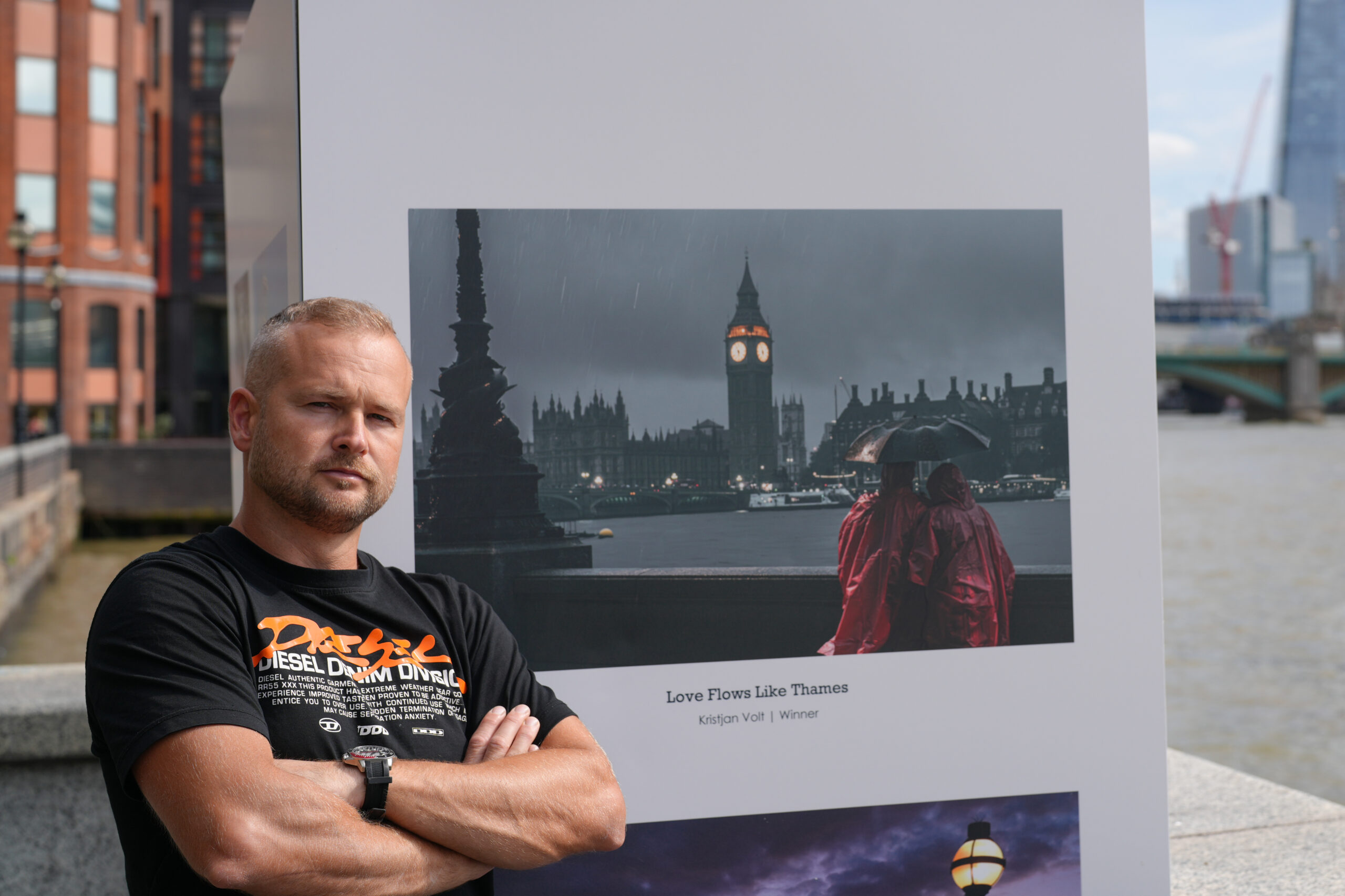
Thank you! Yes, it was the Thames Lens competition, which I stumbled upon quite by chance online, and I thought I’d submit one of my shots. The win came as a huge surprise.
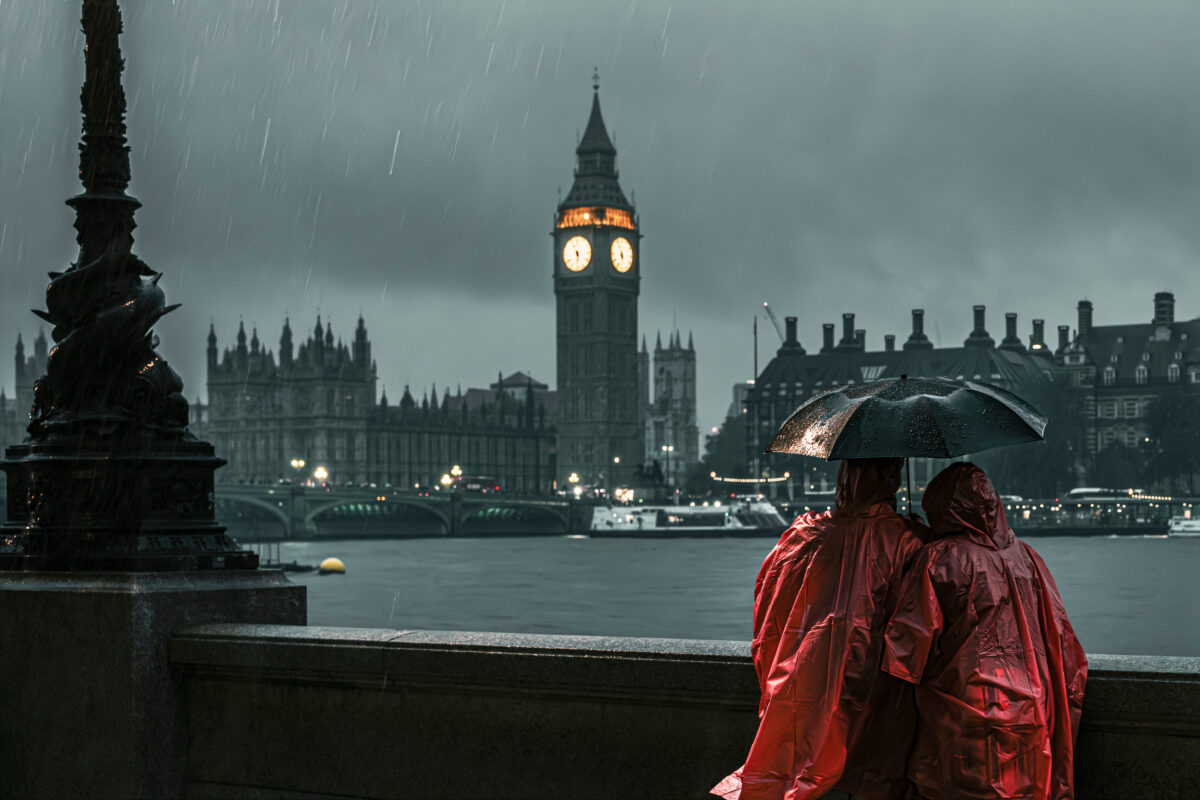
The photo was taken one evening in the city, in a busy tourist area, when I was on my way home – camera in one hand, umbrella in the other. It was pouring rain and the crowds were rushing around. I was hurrying to catch public transport when I suddenly noticed a couple just standing there, enjoying the view of the Thames and London. They didn’t seem to care about the rain at all, they were completely in the moment. I walked closer and captured the scene.
I was lucky that the riverside wasn’t packed with standing tourists that night, as it usually is in better weather. For the competition I titled the photo Love Flows Like Thames.
This win meant a lot to me – it felt like confirmation that I’m on the right track and that my work resonates with others. It was especially meaningful to see my photo exhibited around the city throughout September.
How much time do you spend on post-processing?
It completely depends on the photo. Some are perfect as they are and need only minimal adjustments. Most often I give my photos a “cinematic look” to highlight certain details, moods, and create depth.
I always enjoy “polishing” my images a little – it’s a creative part of the process for me. Sometimes an old, seemingly dull shot can be transformed into something very interesting with the right editing.
What kind of gear do you use, and how important is it for the final result?
Most of my photos have been taken with a Fujifilm X-T5 and a 16–55mm F2.8 lens, but at the moment I’m using a Sony A7RV with a 50mm F1.2 lens.
Gear matters to me only insofar as it allows me to capture what I see with quality and precision. This camera is a bit bulky, which makes it harder to stay discreet – sometimes that can ruin a great opportunity for a shot.
Speed, sharpness, and color are important, but ultimately what matters most is the photographer’s eye and the moment being captured.
Do you have any tips for beginners to capture good photos?
When you step outside with your camera and don’t know if it’ll be a good day for shooting, just stop and take a picture of something right nearby. Those first clicks help you get “into the flow.”
Once you start, you’ll begin to notice interesting spots and situations as you move. Take your time and don’t rush, because often the best shots happen when you’re willing to wait for the moment.
If you see something that could turn into a great photo, don’t be afraid or embarrassed, even if people are nearby watching – try to ignore them and take the shot, because you may not get another chance.
Notice patterns, reflections, shadows. Some days you’ll get a lot of good photos, some days none at all, but every day trains your eye and intuition.
Could you share the story behind one of your photos?
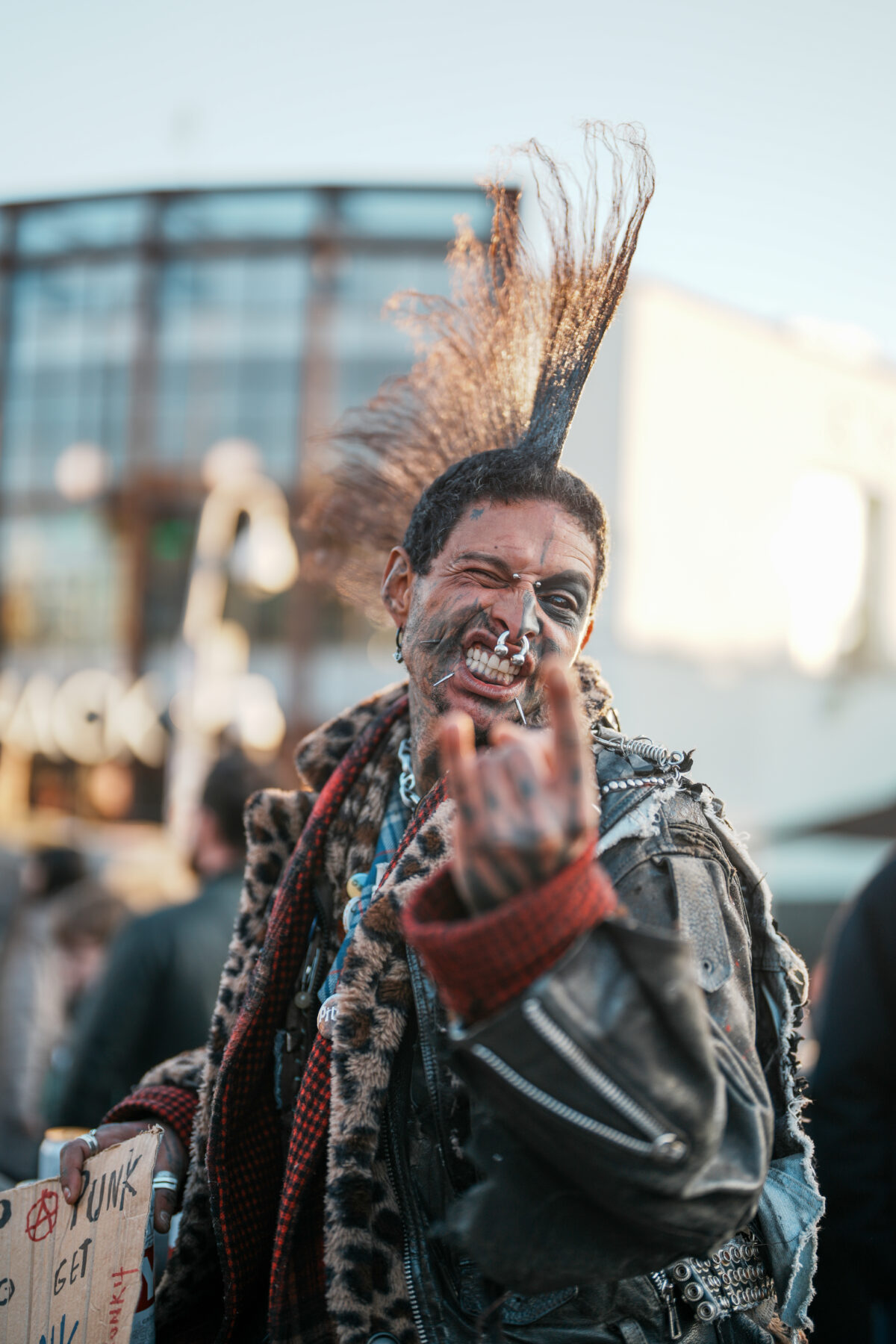
One of my most memorable shots was taken in Camden Town, London. I was wandering around and thought I’d look for a punk I’d seen before near the bridge and finally take his photo.
I approached him, politely asked if I could take a picture, and he gladly agreed. I snapped a few frames and felt pleased. Later, when I was reviewing the day’s shots on my computer at home, I only then noticed that he was holding a cardboard sign that read: “Help a punk 2 get drunk, £2 photo.”
Now whenever I go back to Camden, I make sure to keep a couple of pounds in my pocket – I owe the punk one.
Finish the sentence: “I take photos because…”
I take photos because I love art and the freedom to create.