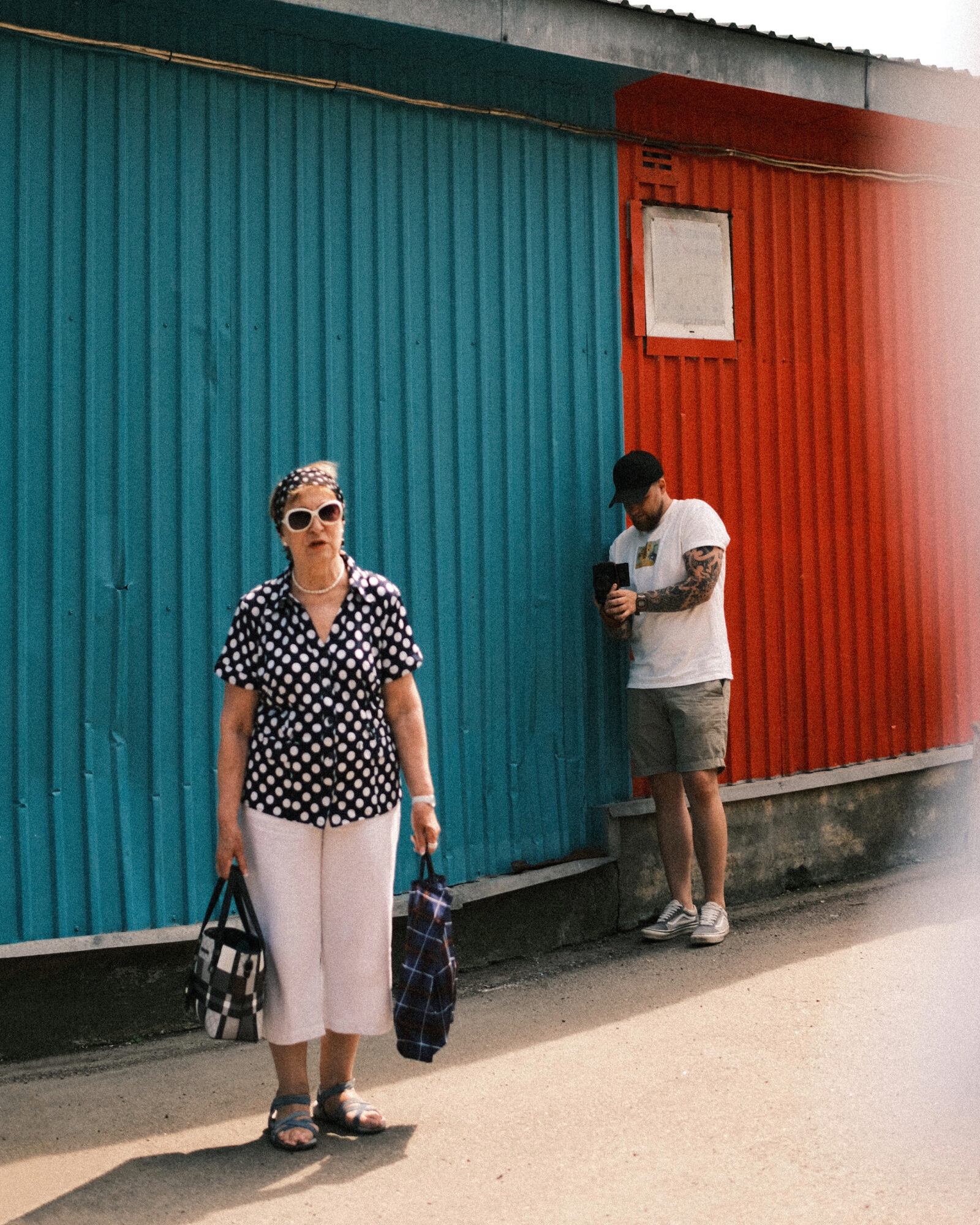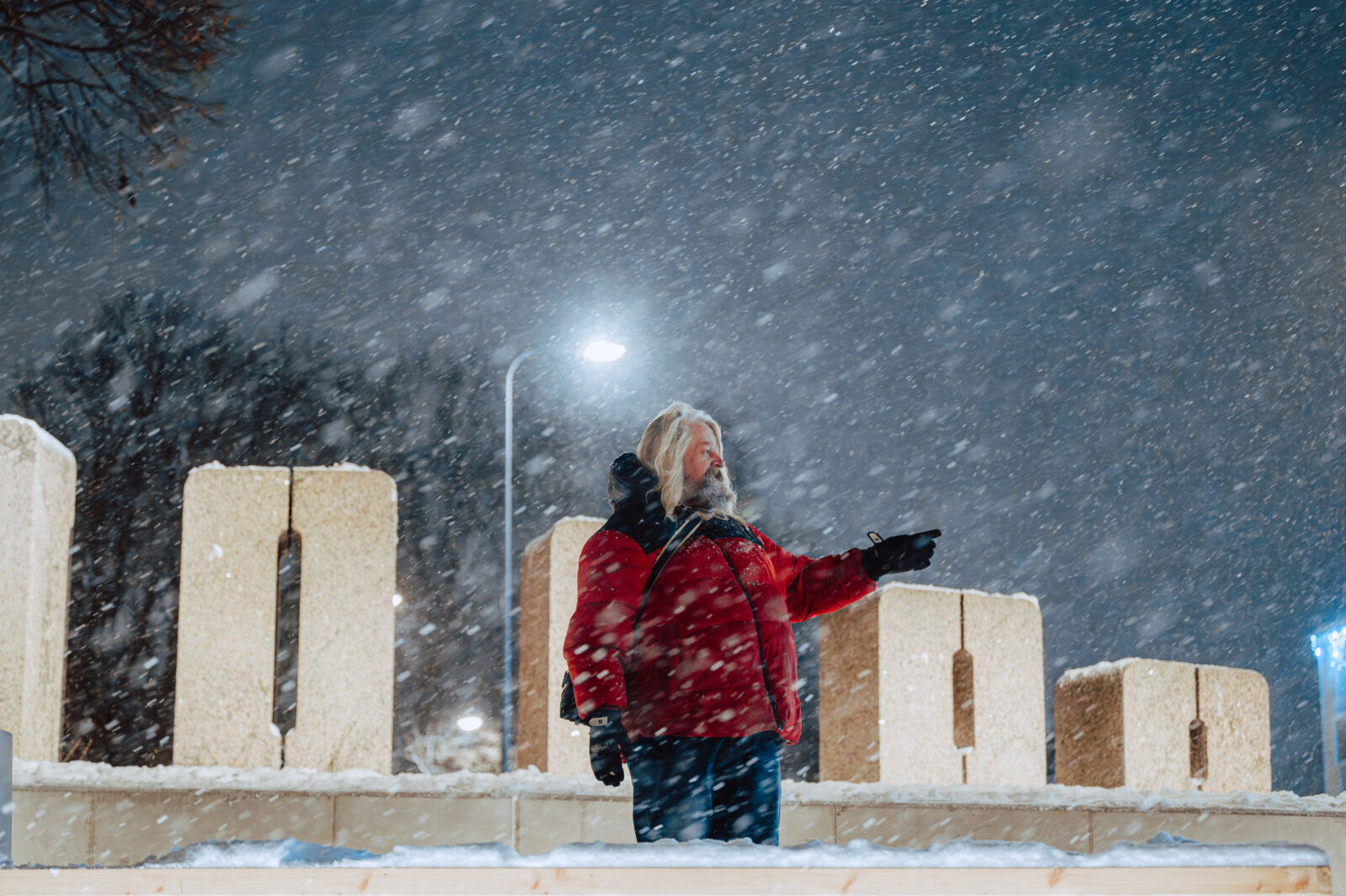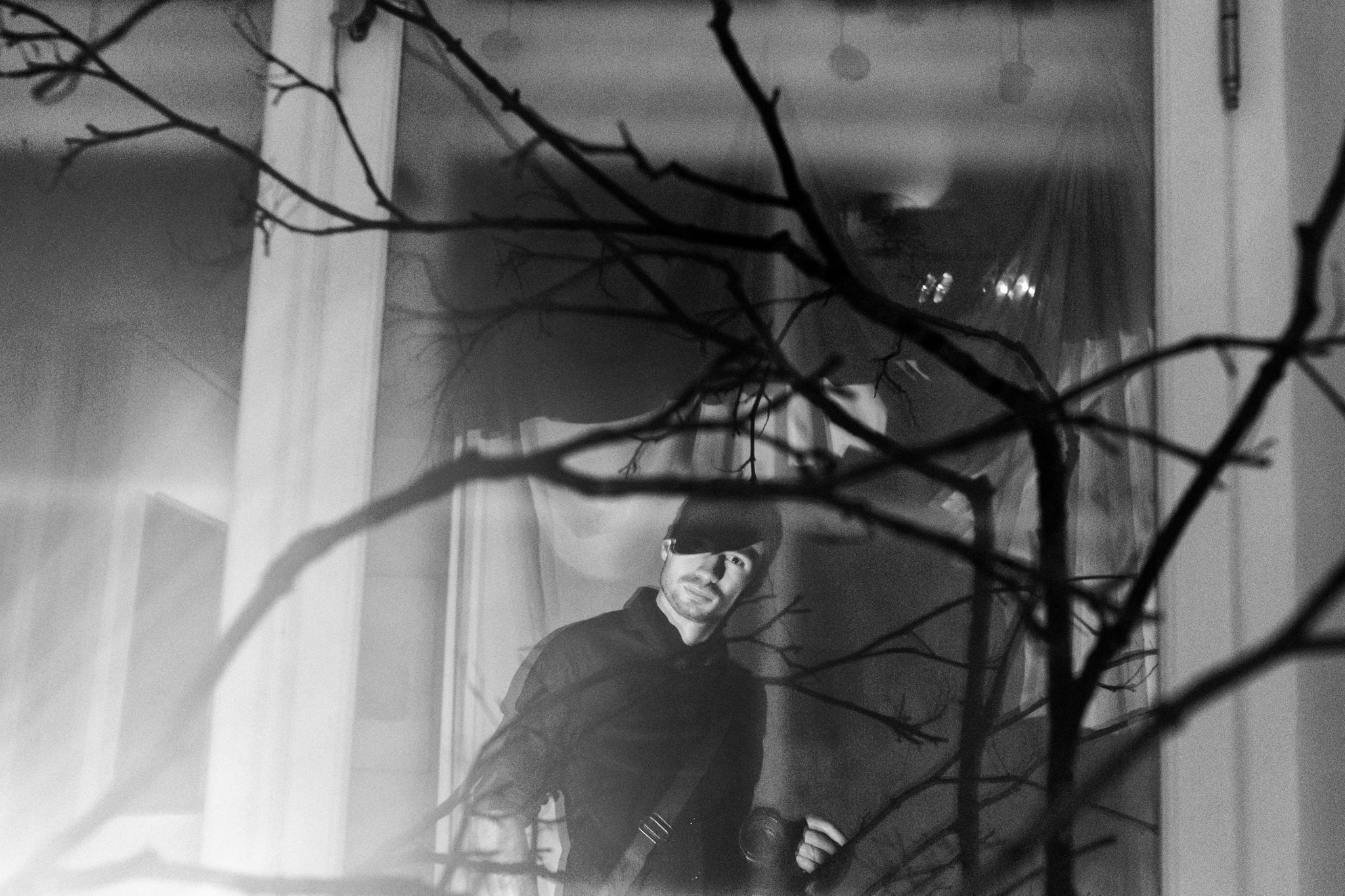
Street photographer Andrii Mur is well known in Estonia and abroad thanks to his striking, direct, and inspiring visual language, and he has won several awards. We spoke with Andrii about street photography and his work in more detail.
How did you find street photography for yourself?
My passion for photography was ignited in childhood, when I flipped through my father’s large black-and-white album from his years of military service. He is an aviation engineer, so for a young mind like mine there was plenty of room for imagination to take flight in most of the photos.
Since 2015, I’ve been interested in documentary photography. Street photography came to me later. I don’t really ever look for it consciously—it simply comes to me.

What does street photography mean to you?
For me, street photography is more of a way of life. Nobody values fake pictures. It has to be an un-staged (candid) photo. The more honest your attitude toward life is, the more genuine the photographs are. Whether it’s “street photography” or not isn’t important to me.
What you’ve photographed is captured forever in your mind, body, and soul. The little details caught on film remain with you long after you’ve forgotten everything else.

Where do you usually draw inspiration for street photography?
Inspiration comes from everywhere—literature, films, art, music, whatever—but above all, life itself inspires me. Sometimes the most interesting ideas come from fields that have the least to do with photography.

You have many photobooks—why do you prefer buying photographers’ books instead of following them online, and how has that influenced you?
This question is similar to whether you prefer listening to music online or on vinyl, isn’t it? Books offer a deeper viewing experience—they’re more tangible and more structured.

Do you have a favourite photographer or photo that has influenced you?
The last time I gave a talk at Pärnu Library, I showed some of them. It took an hour and a half just to give a brief overview. The list is constantly changing.
If I had to name one, it would be Sergio Larrain, because he was the first master photographer who influenced me the most.

When you go out, what are you hoping to find? How do you usually approach it?
“This is the way” (a quote from “The Mandalorian”). Moving from point A to point B, I’m open to everything wonderful that might happen, rather than hoping for something specific.

Over time you’ve built up several photo series. Could you talk about them in more detail?
All of my photo series come and go naturally, and I see them as a way of sensing and perceiving life—so there isn’t a long explanation needed.
- “Window to Kalamaja” is connected to the neighbourhood where I live.
- “National Colours” (National Colors) is the easiest to understand—it’s a reference to the Ukrainian flag.
- “Drops of Melancholy” is about melancholy in space, and inside me—and inside you as the viewer.
- “After Dusk” was shot at night, handheld, without a tripod.
- In the series “Fulfilling the Emptiness” (Fulfilling the Emptiness), “The Look from Silence” (The look from Silence), and “The Son”, I simply photograph toward an idea and see whether it resonates with the viewer. The most genuine series are often the personal ones.

How is photographing on the streets in Estonia different from Ukraine? Where would you rather go to photograph? Do you have a favourite place?
Yes, they’re quite different. First of all, much more is happening in Ukraine. I don’t want to offend anyone, but people are also more open there. For example, talking to strangers on the street is quite natural. I especially like photographing in Lviv. For me it’s a great mix of architecture, culture, historical contrasts, good light, and coffee.

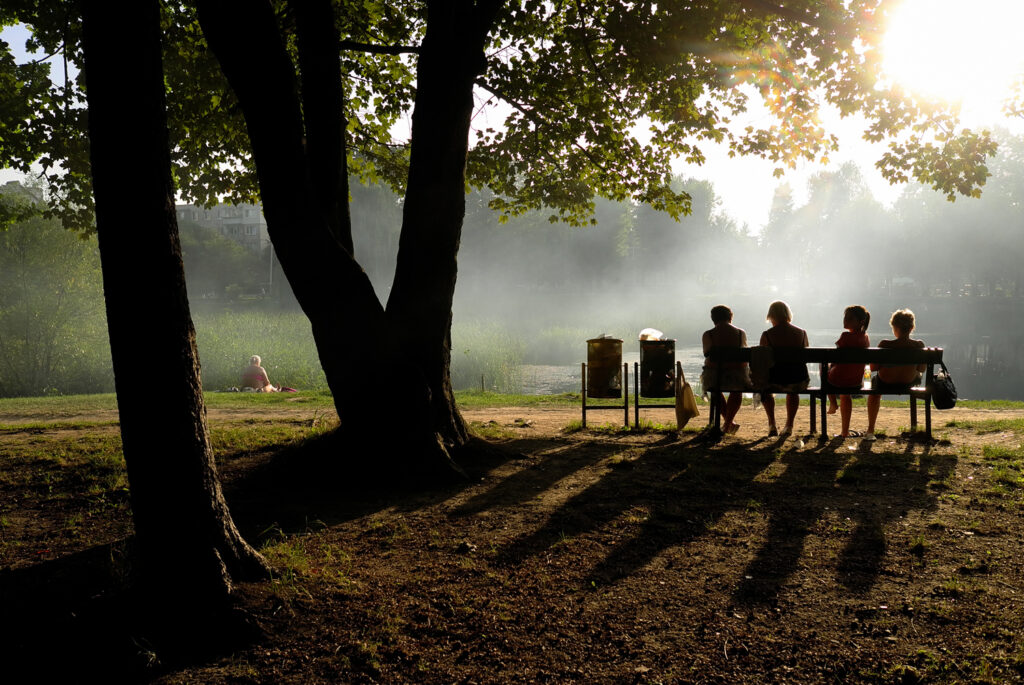
Do you have any good advice on how to become a better street photographer?
The best tip is: go out on the street and shoot. In 2019 I took photos 365 days a year. Last year I didn’t have that goal, but there were still only a few days without photographing. Second, after shooting, try to analyse what could be better and why you didn’t get the result you wanted. I also recommend finding master photographers and trying to understand how they work—or imitating them until you find your own style. Finally, be open, share your work, gain different experiences, and enjoy all of it.

What gear do you usually use when you photograph on the street? How important is gear?
For five years I shot with a Canon 5D Mark III and a 50 mm lens. After that I switched to compact cameras: a Leica D-Lux 4 and a Leica X. Now I use an analogue Leica M6 TTL with a 28mm lens. Cameras don’t play the main role in what you want to say—they change the way you’re able to say it.
Could you share the story behind one photo?
Okay—I can talk about the photo “Lady in Red”, shot on film in autumn 2020. I was in a hurry to get to a friendly meeting and was waiting for a tram. From a distance I noticed a red heart-shaped handbag, and I felt the urge to photograph that potentially interesting scene up close. Of course, the tram left without me. As I got closer, I also noticed the lady’s elegant white gloves. Shot ideas were already flickering in my imagination. But the lady in red turned out to be extremely fast. She was in a hurry too, holding her keys in her right hand. The scene changed very quickly, so I had to run a little to catch up. She looked back at exactly the right moment—and everything worked out.