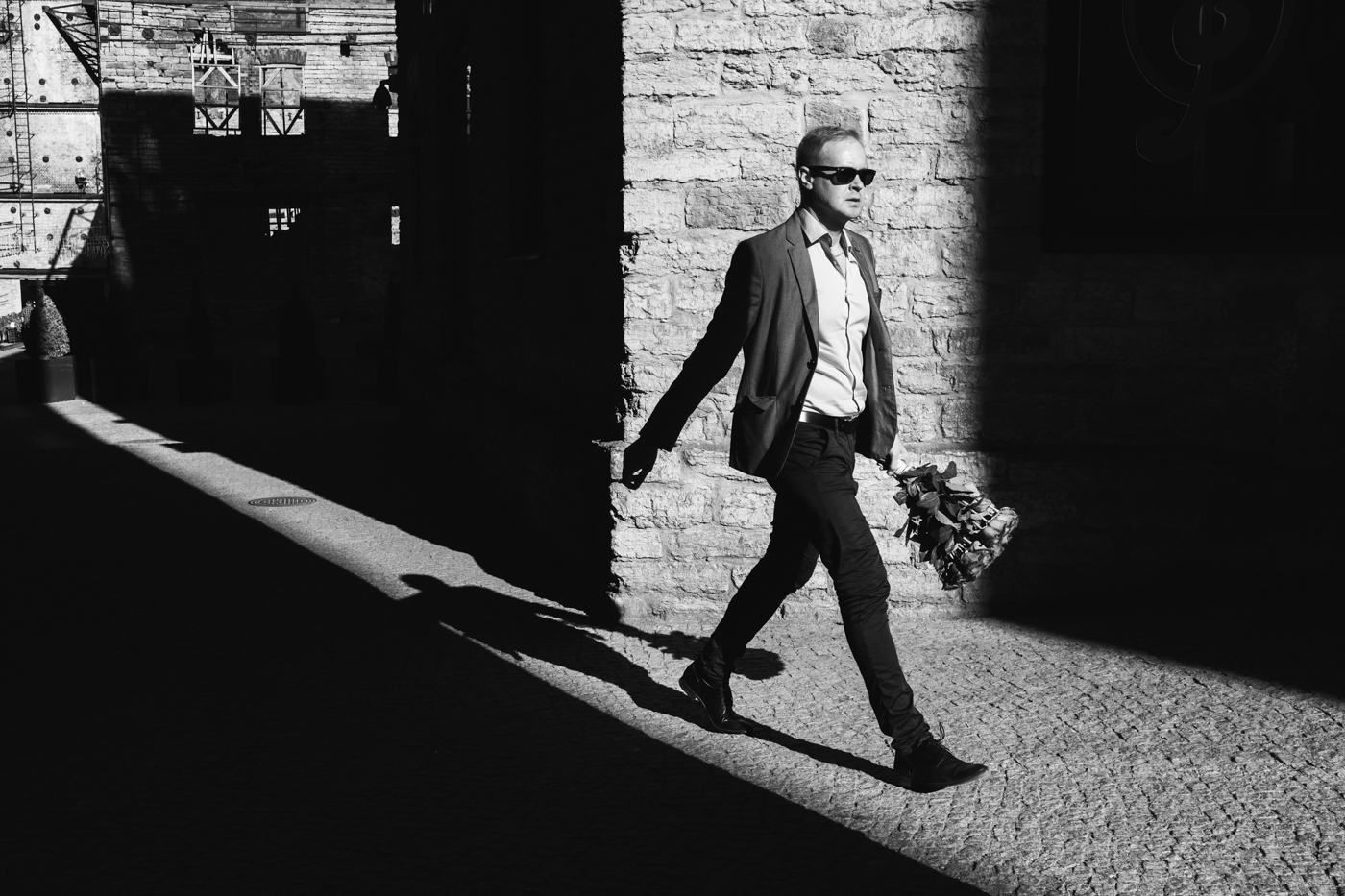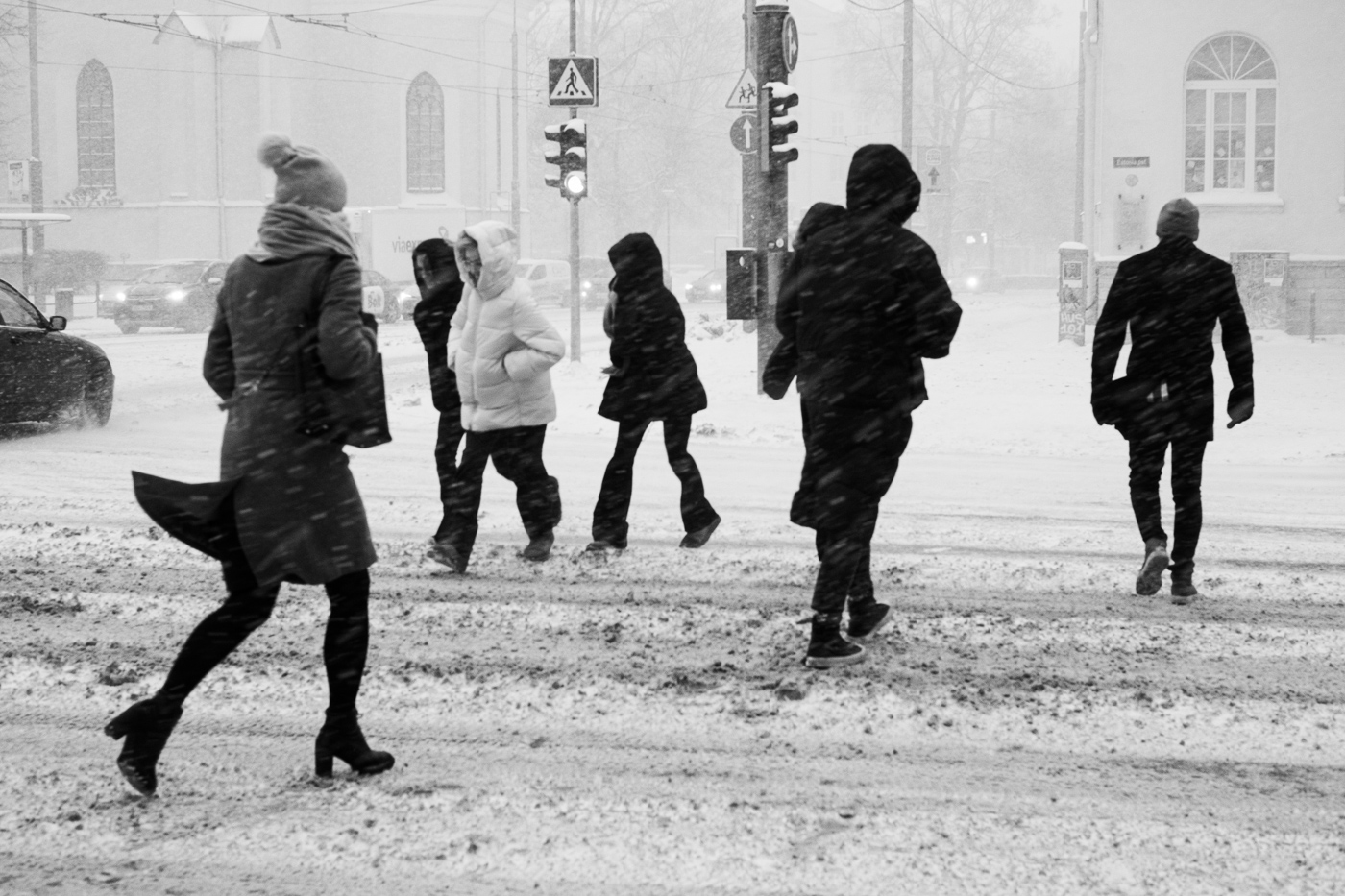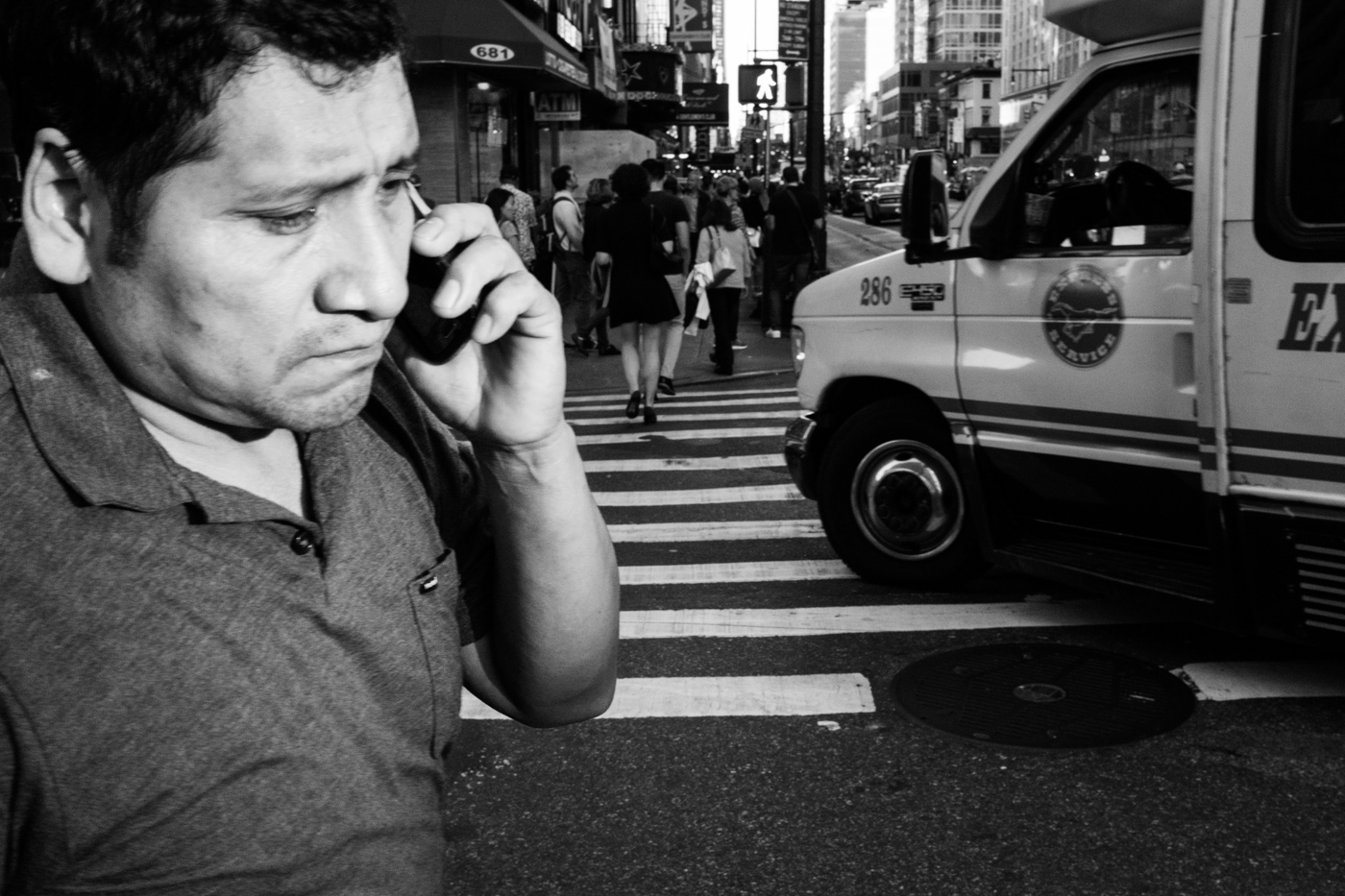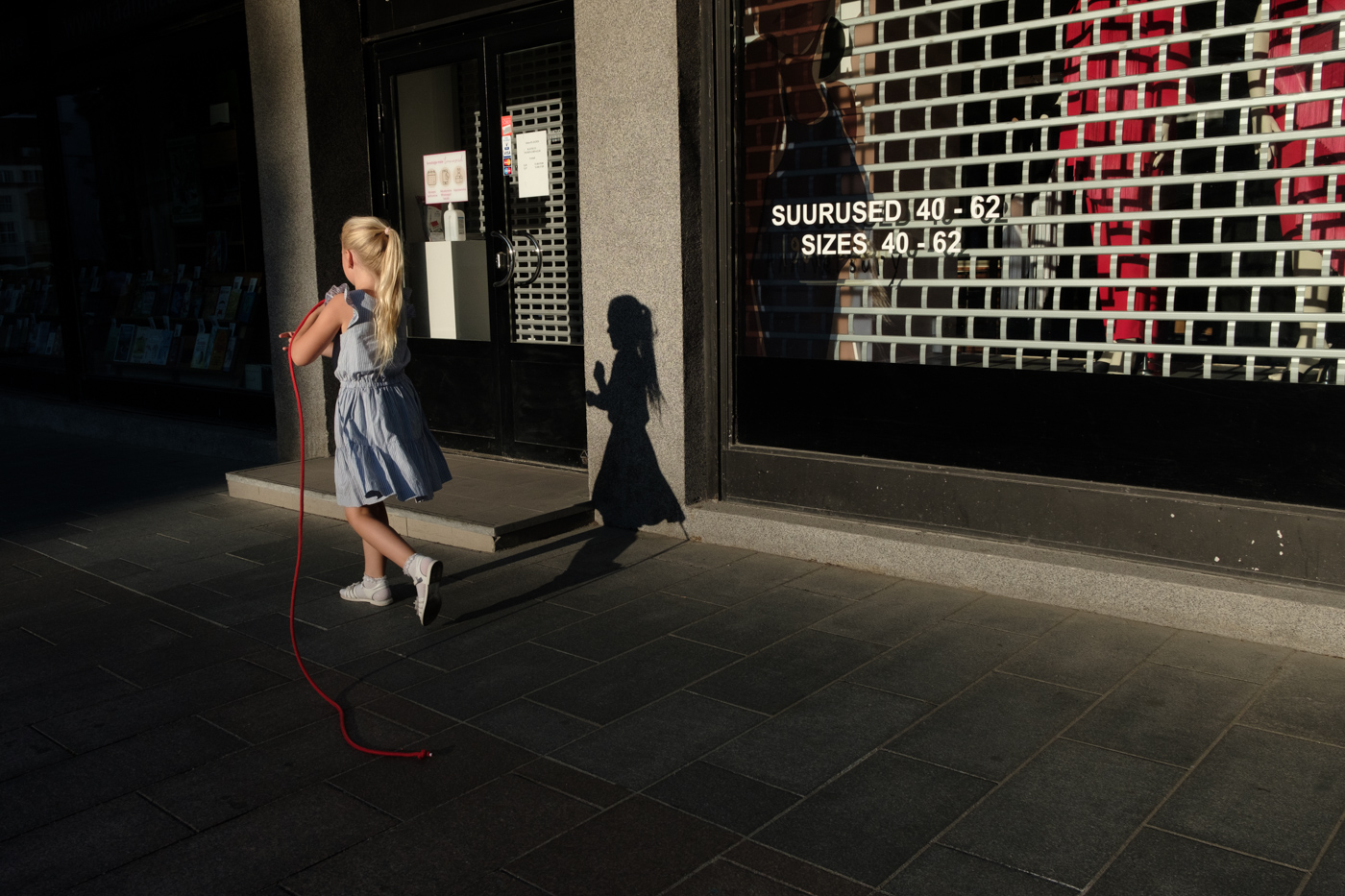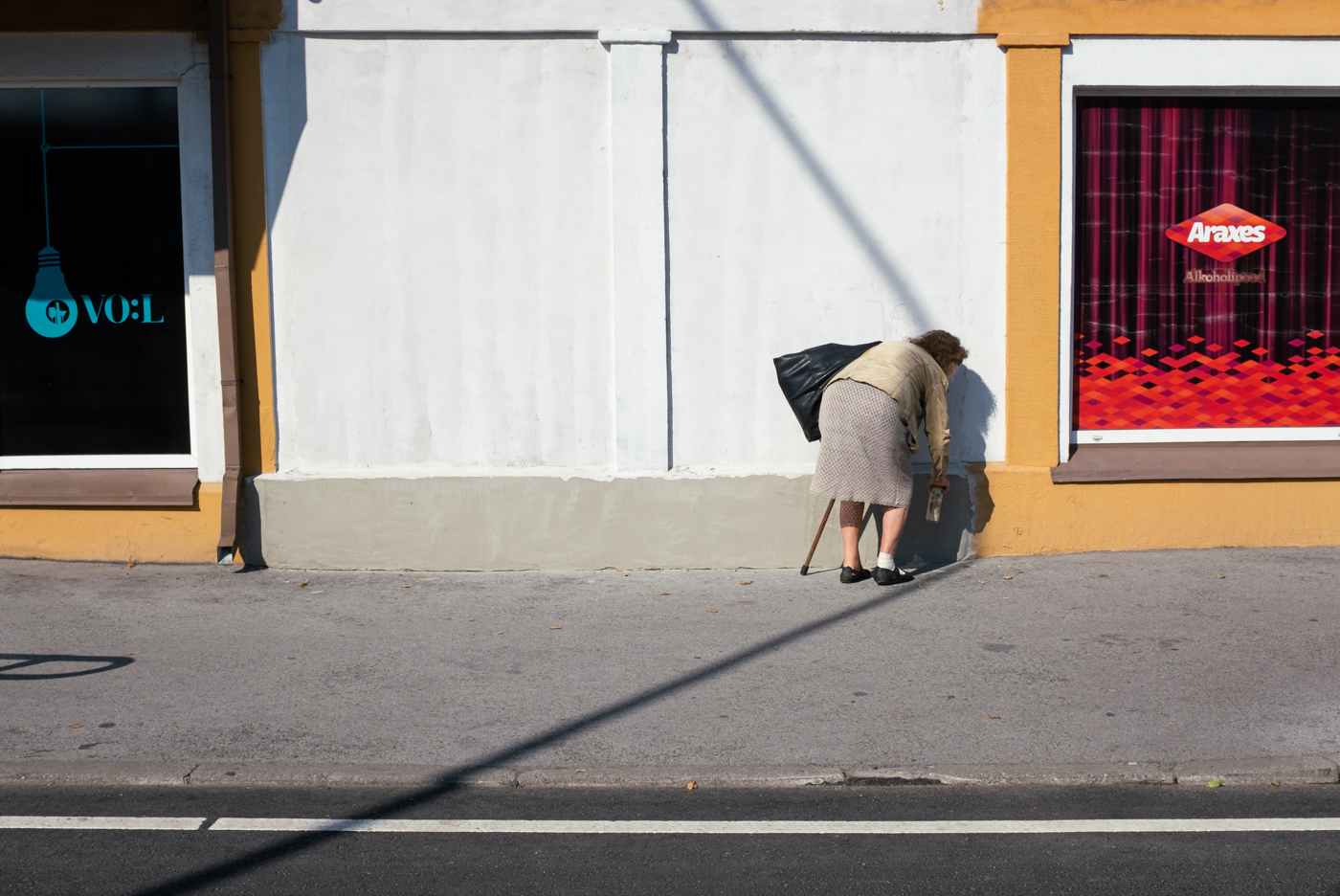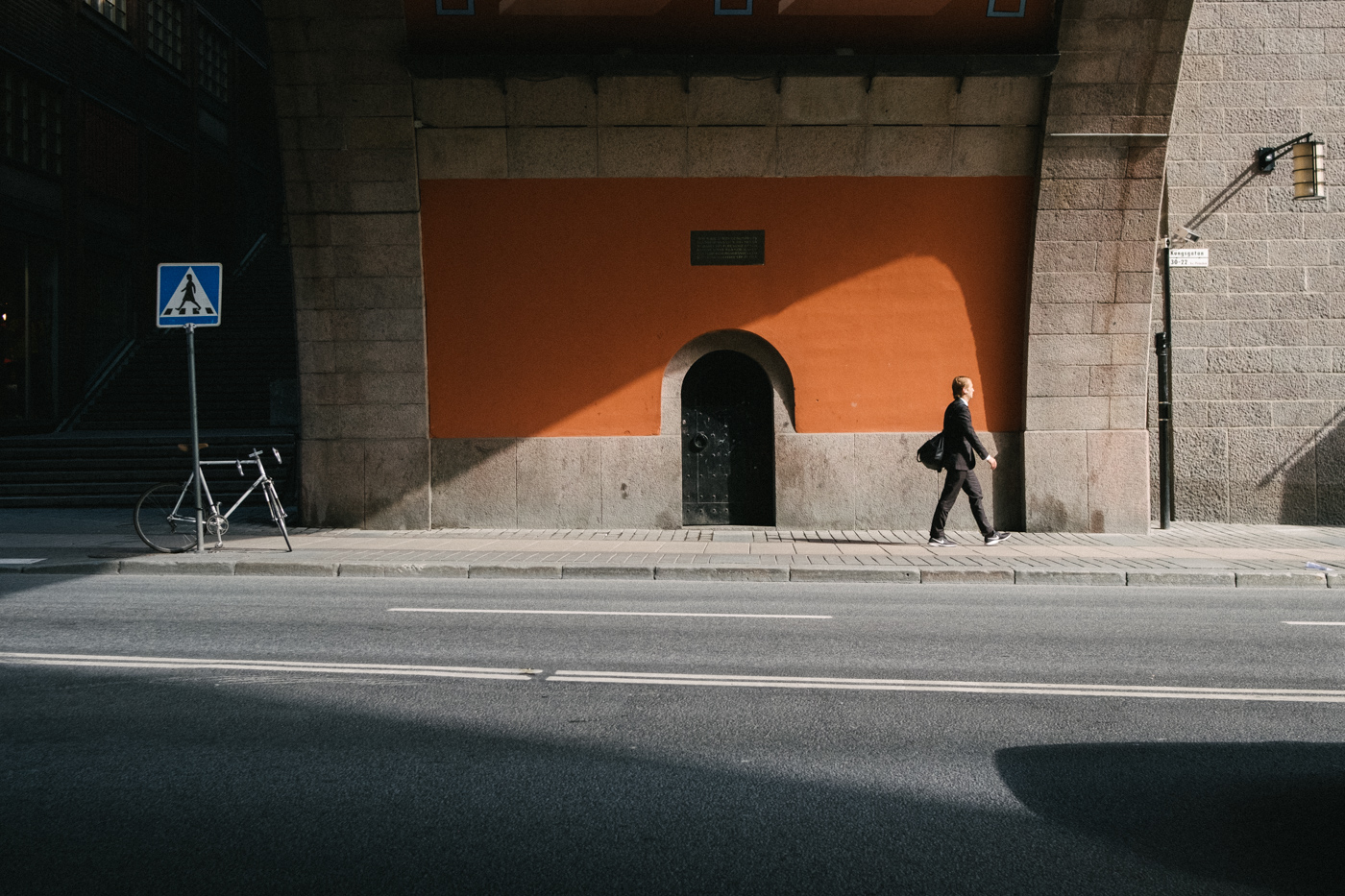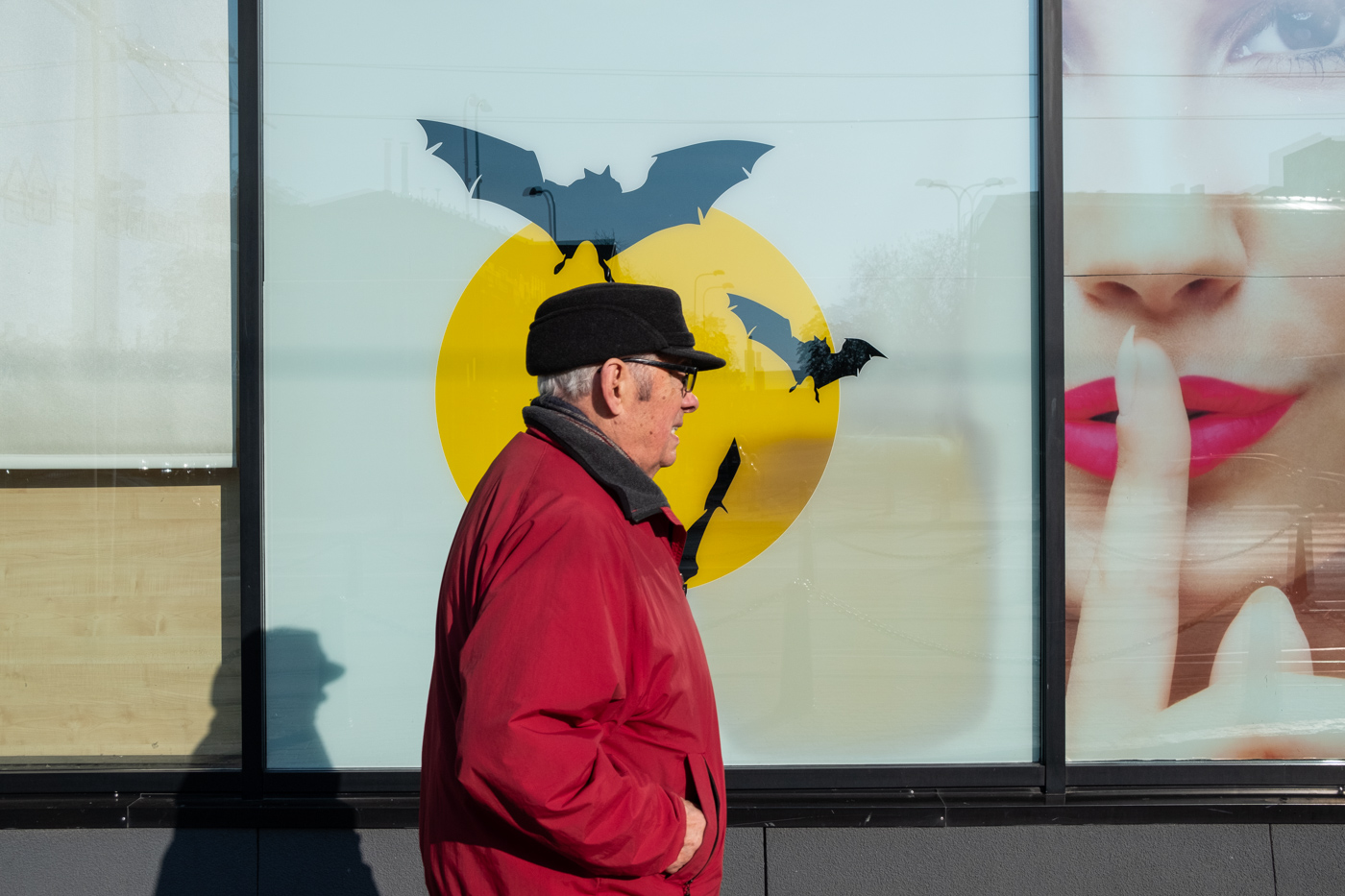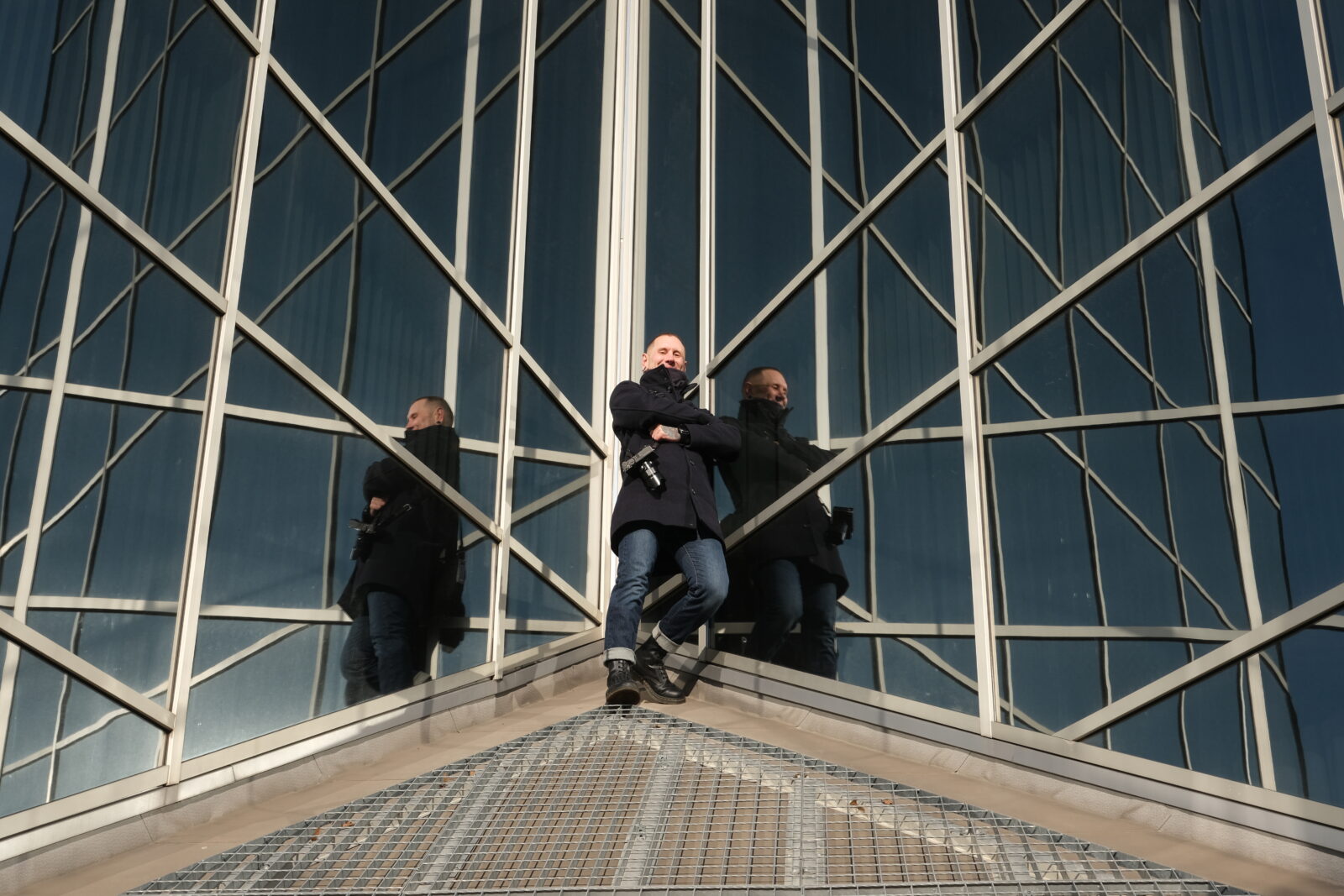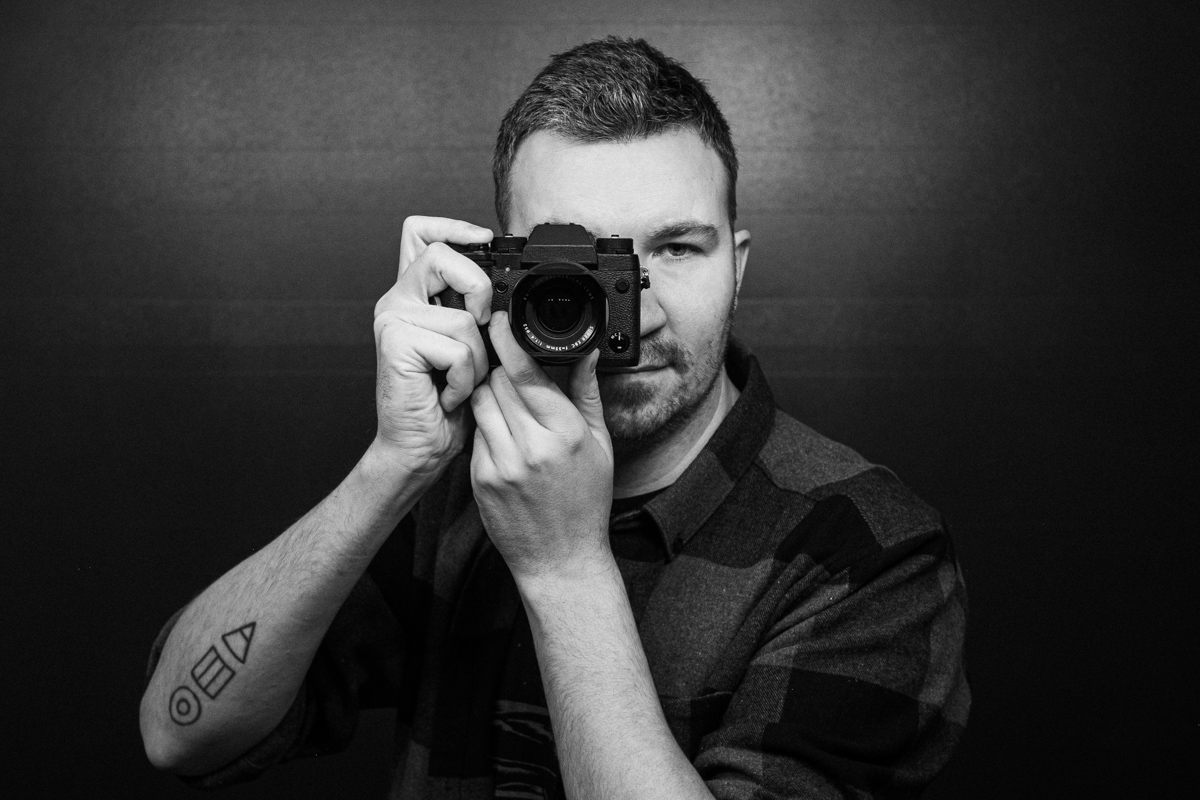
Mikk Olli is an Estonian designer-photographer who has been residing in America for a long time, daring to step out of his comfort zone on the streets and capture unique moments. We asked him how he arrived at street photography and how he perceives street photography here and across the “pond.”
What does street photography mean to you? Why do you shoot on the street?
For me, street photography is an opportunity to capture and share moments that excite me and that I notice while being outside. Moments where all the necessary components come together from my perspective to create something new and exciting.
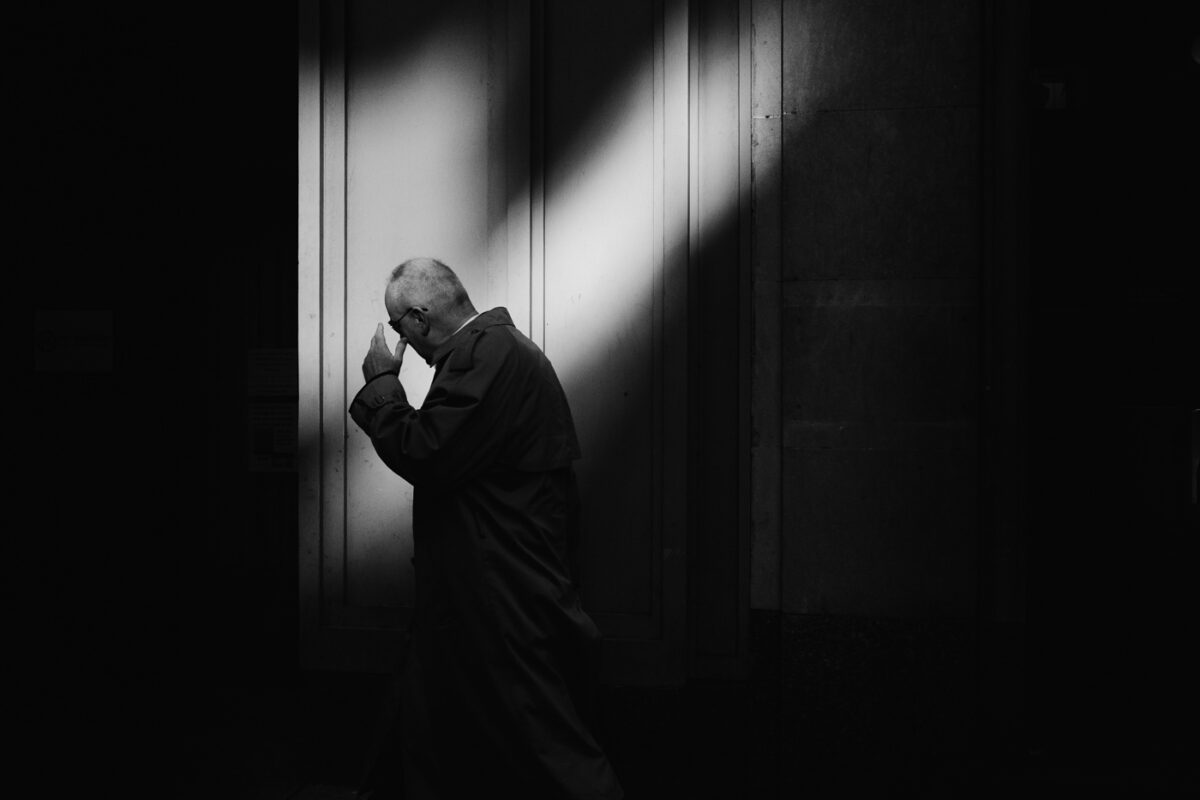
Shooting on the streets suits my nature well. I don’t have much patience for long planning. A street photo is born in just a few seconds and is quite challenging in that regard. A good street photo must be a combination of good light, an interesting subject, quick decision-making, composition, perfect timing, and your storytelling ability. You have little control over most of these elements on the street. You can only train yourself to notice those moments and react to them more quickly.
How and when did you discover street photography for yourself?
I remember very well the first photowalk where I consciously went out to take street photos. It was at the end of 2013. Unfortunately, I don’t remember what specifically led me to that point, but moving to America definitely set me on the right path. This new environment suited me so well that I found myself constantly shooting outdoors. Initially, I tried to capture the power of the big city, completely excluding people from the streets. It was probably inevitable that I eventually stepped out of my comfort zone and started chasing people and moments.
Who or what has influenced you the most in photography? Do you have any role models?
There are far too many role models. I follow, read, and listen to information about street photography from many channels, and sometimes it feels like I actually want less noise and to delve deeper. To this end, I have tried to acquire more various photography books in recent years. A photo on paper holds a completely different value than when scrolling past it in a feed.
Without naming the greatest classics, for whom there is a lot of information available, I would suggest names like Siegfried Hansen and Jonathan Higbee, who for me are the complete street photography “stand-up” comedians. Hansen with his minimalist approach and Higbee with his ability to turn any ordinary moment on the street into something funny. Both have their own style, which I find distinct from the crowd. On the other extreme, with more classical black-and-white photography, Phil Penman and Andre D. Wagner have long been role models for me, capturing images in New York.
Your images also reflect influences from your designer background. Do you consciously think about this while photographing, or does it come naturally?
In a designer’s daily work, one must constantly seek a balance between what is important and what is not. You also train your compositional eye every day. While photographing, you can’t think about it, but a visual language has certainly developed that automatically carries over into photography.
You also photograph environmental images, such as the “Coneyard” or “Cityscapes” series. How did these come about?
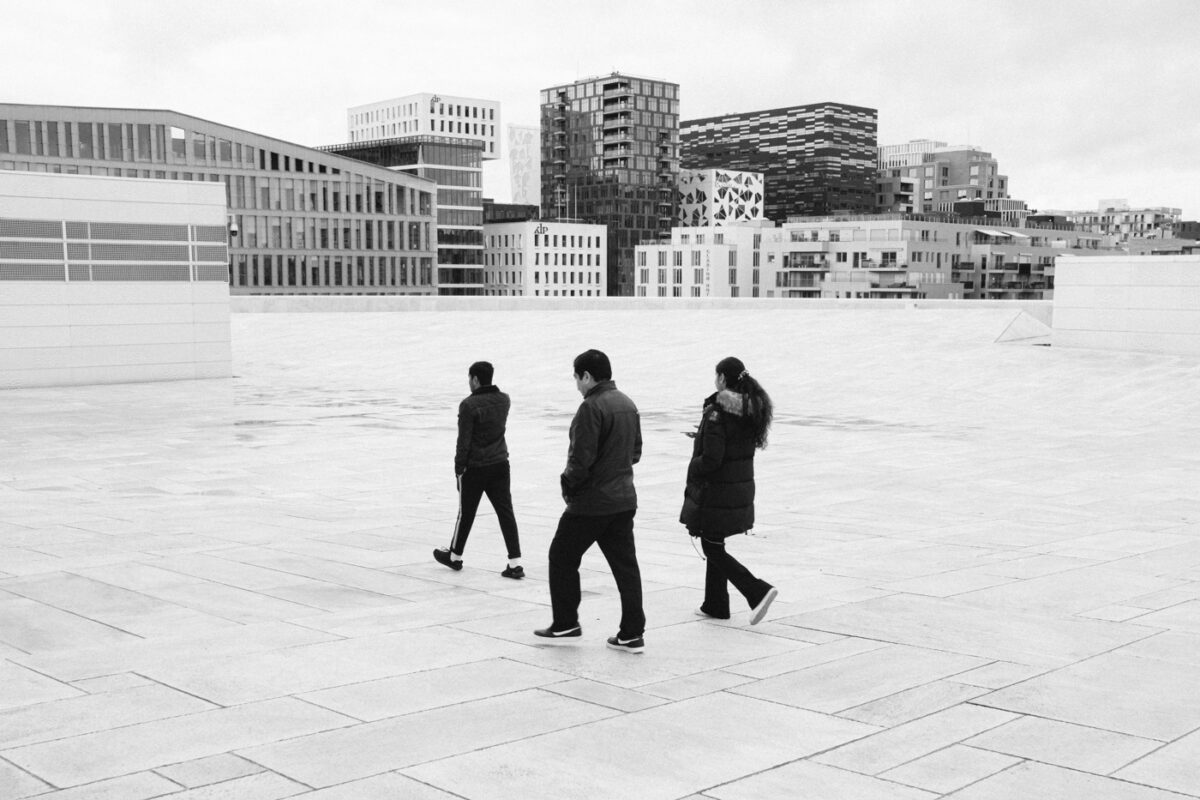
I really enjoy big cities. I always feel comfortable in them, and they are endless sources of inspiration for me. I have been photographing various urban environment images for much longer than specific street photos with people. The Cityscapes series is a collection of the more interesting finds for me. The Coneyard series came about as I started noticing patterns while going through my photo archives and juxtaposing them. It turned out that many intriguing traffic cones had accumulated. Initially, they didn’t seem like something to share with others, but together they started to work as a sufficiently strange series.
You photograph both in Estonia and America. The difference is certainly very large… Is your approach to the streets different as well?
I lived in America, in Boston, for over six years. During that time, interests and styles developed regarding the types of images I was pursuing. However, what most drove me out of the house was the city itself. I rode my bike and camera through all the places I ended up in. I would even dare to say that thanks to this, I know Boston even better now than my hometown of Tallinn.
Now I have been back in Tallinn for a few years, and it feels like I have had to rethink everything from the beginning. The city is completely different, people behave differently, even the light is different.
Although I have firmly settled on my 23mm crop focal length over the years, I have even tried to shake it off to rediscover a style and way of photographing that suits me, in order to adapt to the ‘new’ environment. I am still in the process of searching for the right approach.
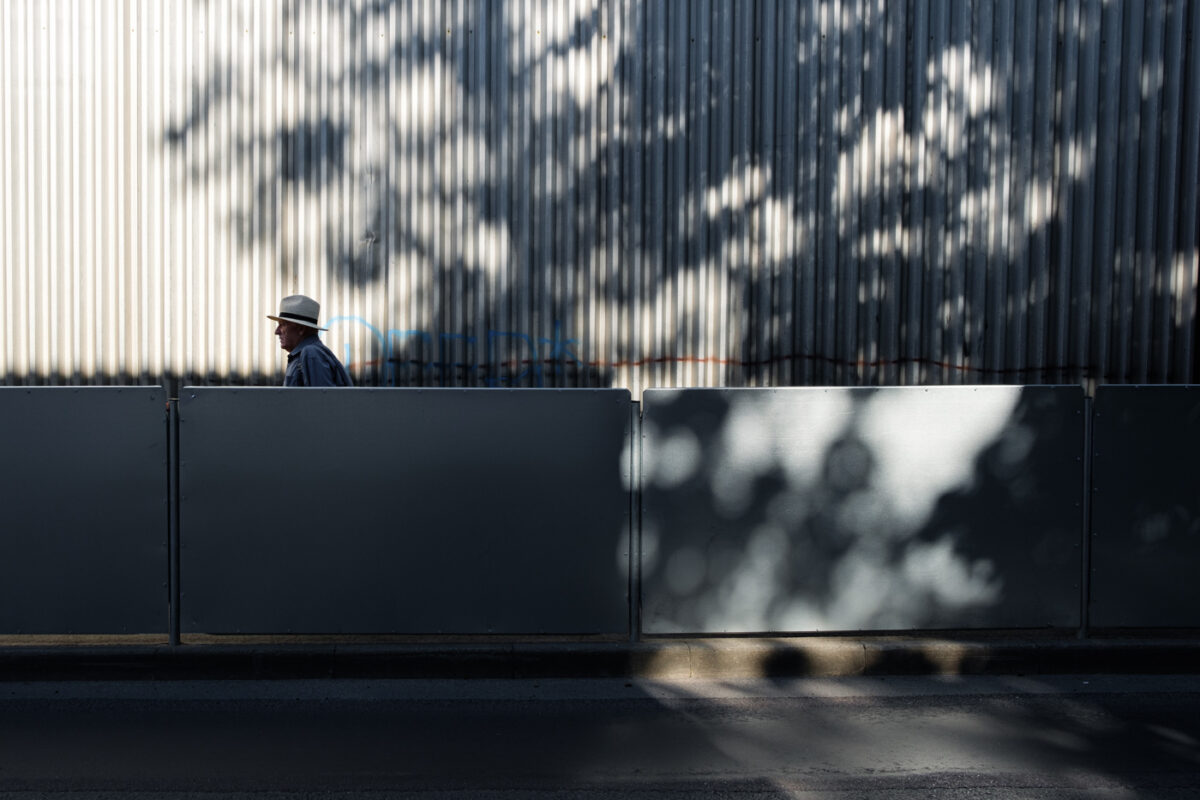
What is it like to photograph in America? Is it easier to find exciting shots in the hustle and bustle of the big city? How do people perceive photography?
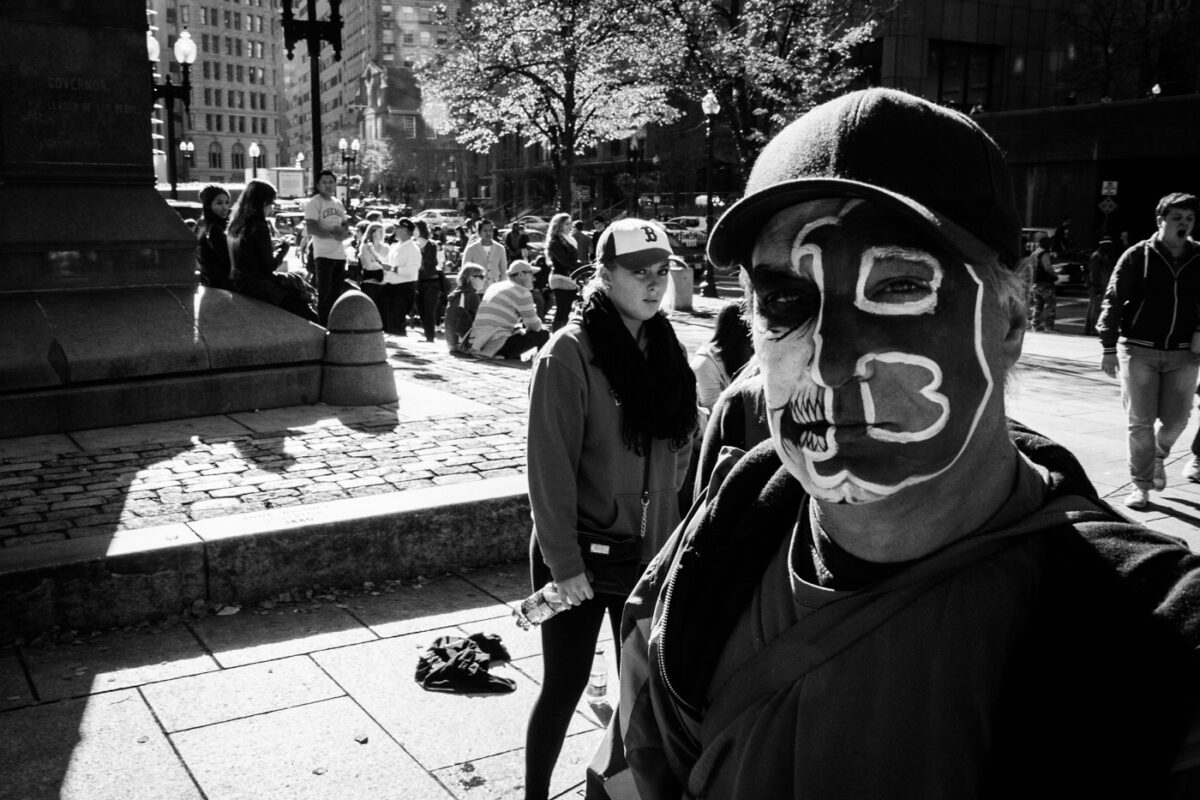
I tend to be an invisible photographer on the streets. I believe that I do not want to get in anyone’s way or irritate them unnecessarily with my activities. I have not had any significant unpleasant encounters with people who would find photography objectionable. Generally, however, people there are much friendlier and more open than here, and the biggest difference is that there are simply many more characters on the streets to photograph.
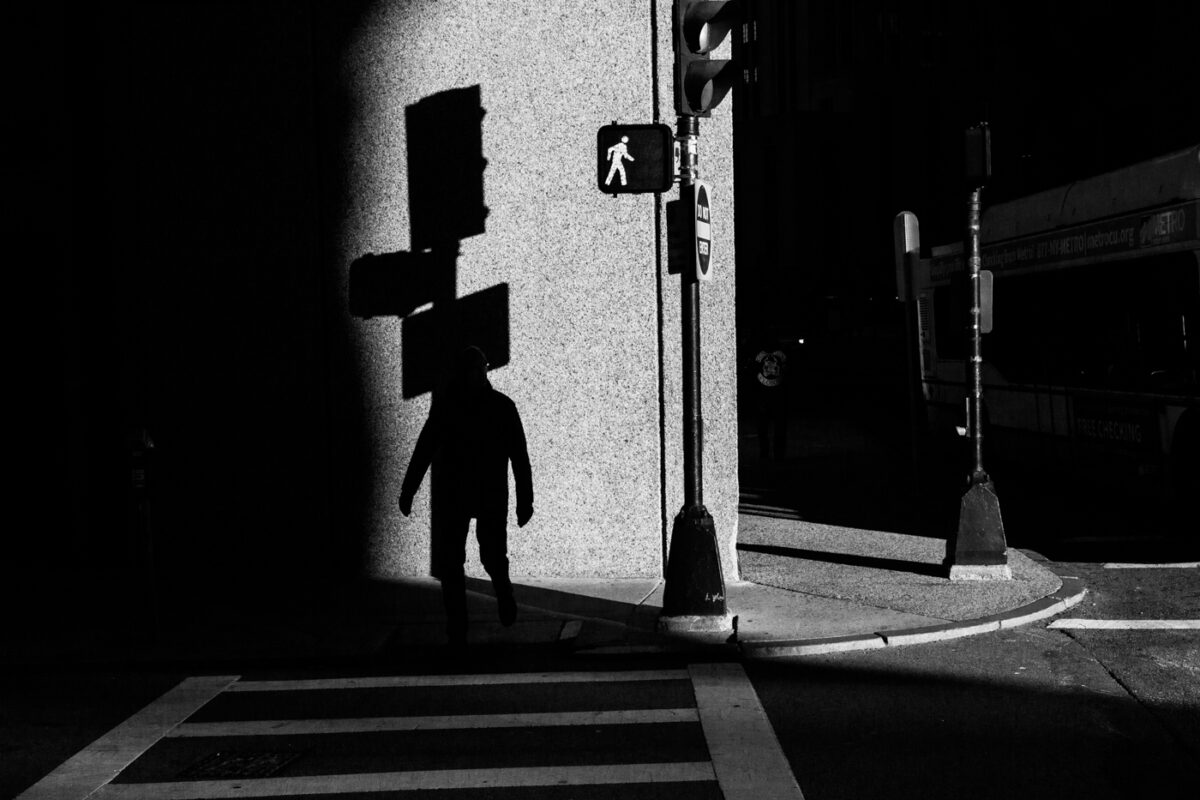
In hindsight, it was very easy for me to get into a good flow on the streets of Boston, but New York (which is one of my favorite cities for various reasons) always required a lot of adaptation and a completely different approach.
What do you think about photography in Estonia? At first glance, it seems there are quite few opportunities for street photography compared to big cities.
Photos taken in Estonia certainly appear very extreme and different to someone from a big city in the rest of the world. There are indeed fewer people on the streets, but there are still plenty of opportunities.
At the same time, just like every photographer must find the right tools and methods, they must also find a suitable environment that motivates them to take pictures every day. I am still searching and adapting here.
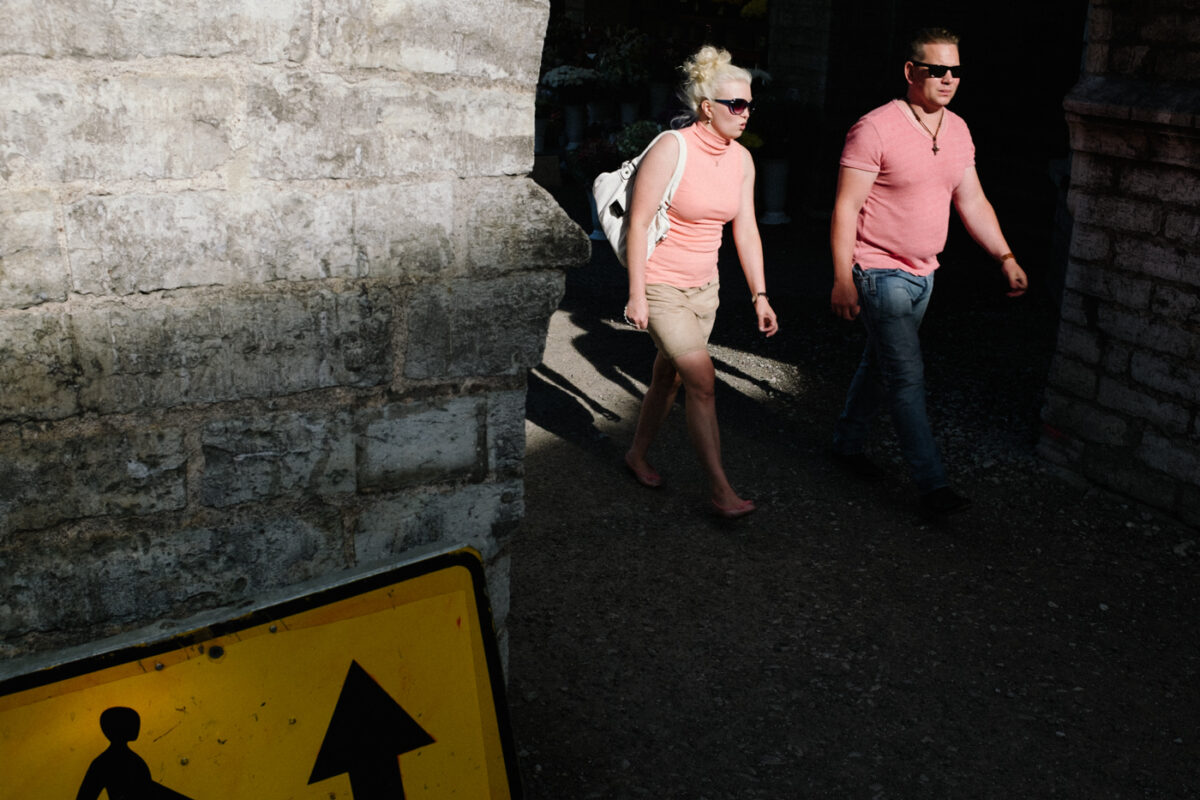
Do you have a specific goal in mind (like looking for a particular subject, light, etc.) when you go out on the street, or do you just see what happens as you go along?
I don’t have a specific goal and I don’t plan much. I just try to step out the door more and only afterwards look for patterns in the moments that caught my eye.
Is the picture more colorful or black-and-white?
I was a black-and-white photographer for a long time. My brain works better in that simplified state, and it suits my style of photography. However, in Estonia, there is a lot of dark and gloomy weather, and in summer, there are many exciting colors during sunrises and sunsets. For me, neither of those situations works well for black-and-white photography. Now I am trying to take more color photos. On one hand, to challenge myself and force myself to work more with colors. On the other hand, I am simply looking for variety and adapting to the environment. Perhaps I have reached the next chapter as a photographer.
What technique do you use in photography? Do you think it plays an important role in the final result?
Technique plays a significant role in whether it does what you need it to do and whether you enjoy working with it. The brand of camera or lens you have doesn’t really matter.
I primarily shoot with a Fujifilm X-T2, mostly with a 23 mm F2 fixed lens, because it is a small and lightweight camera, and all the physical buttons I need are readily available. I still challenge myself occasionally with focal lengths, but I always feel most comfortable with the 23 mm (or 35 mm full-frame) lens.
Do you have any good tips to share with beginners?
- If you went out to take photos and didn’t get a single good shot, that’s completely OK. Go again and again and again.
- Just because you go out to take pictures once doesn’t mean you got a good shot right away. Forget the emotions of the moment and compare your images side by side with those you aspire to. Analyze.
- Street photography is not just about documenting life. Currently, over a trillion photos are taken each year. Everyone is photographing and ‘documenting’. What makes one photo better than another?
- Do not limit yourself with the thought of what belongs or does not belong to street photography. Shoot what catches your eye.
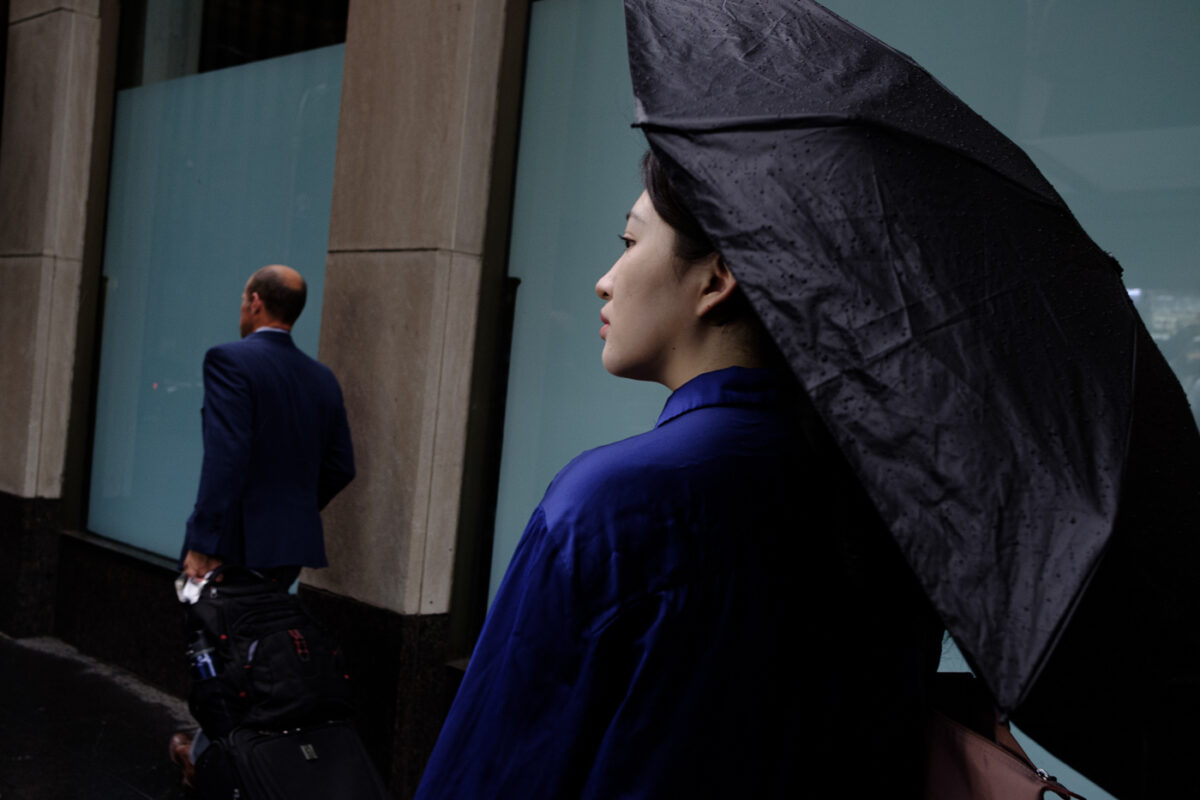
Could you share the story behind one of your photos?
The ‘stories’ of more interesting photos usually reveal themselves to me only when they are already on the screen at home. Rather, there have been many situations where a shot was completely missed because I didn’t have my camera with me. There isn’t anything very glamorous happening in the life of a street photographer. A lot of sneakers need to be worn out and bad photos taken to sometimes get good ones.
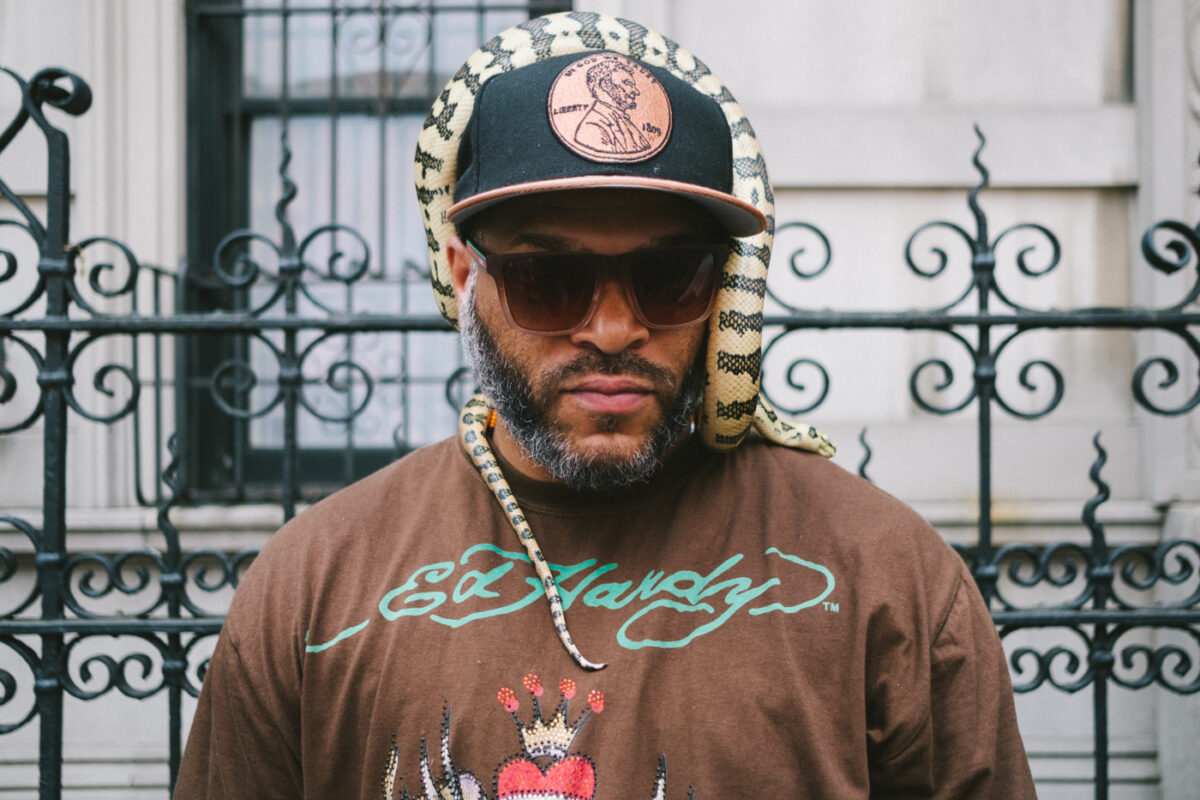
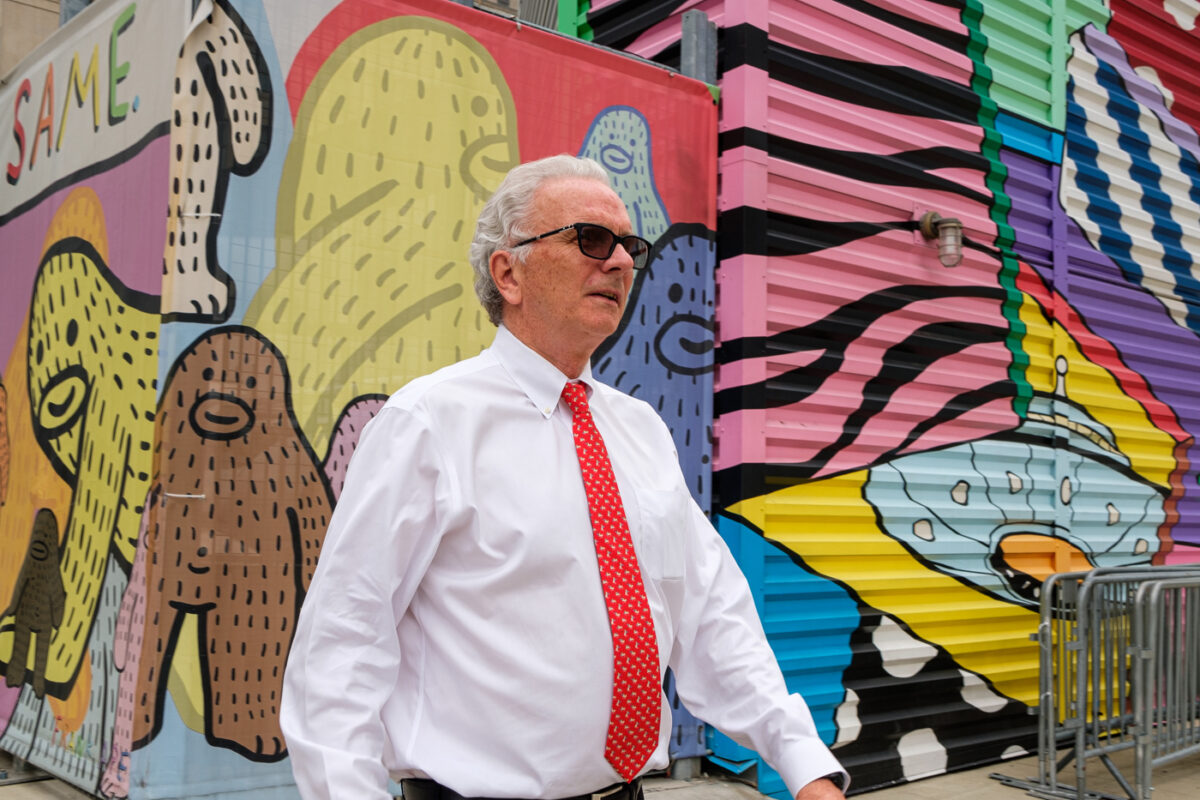
Here, I will share a street portrait instead. It is interesting to me precisely because of what was happening behind me. I happened to be at the Pride Parade in New York with my camera, where the streets were packed with people. While moving through the crowd, I noticed a guy with a snake crawling on his head. A quick nod as I passed by to ask for permission, a click, and I moved on with the crowd. Fortunately, it happened that no one else was in the frame. They probably kept their distance from the snake. Later, I discovered that the ribbons of the fence in the background also looked like snake tails.
Check out Mikk Olli’s photos on Instagram or on his website.