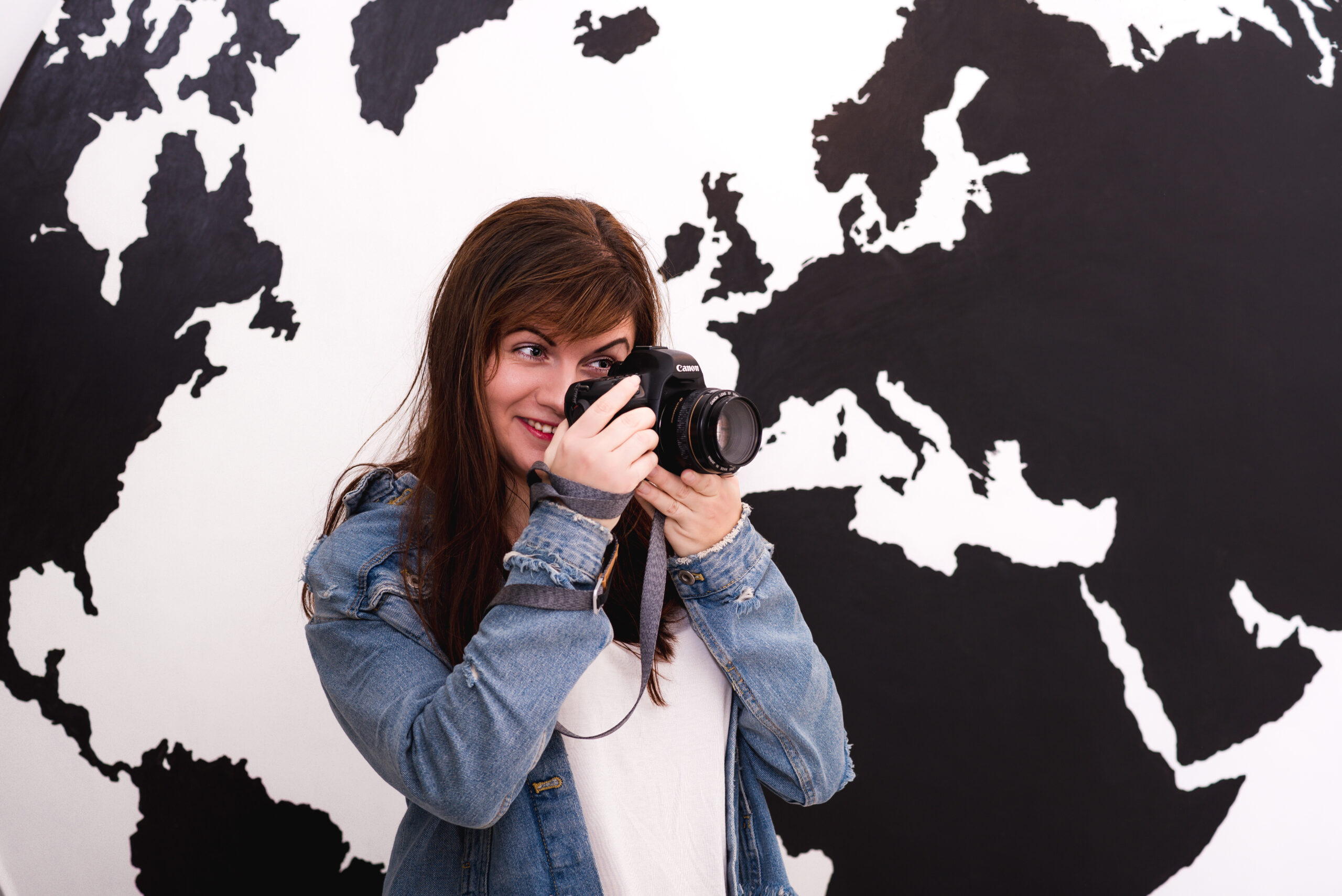
For the past seven years, Andra Hamburg has been documenting everyday life through a lens.
Her photography focuses on noticing everyday moments and finding unexpected scenes in the urban environment. She draws inspiration from the work of both old-school and modern photographers such as Martin Parr and Craig Whitehead.
How and when did you discover street photography?
I can’t remember exactly, but it was about seven years ago when the first hints of it reached me. At the time, I was working as a volunteer for a youth magazine, and I joined a group of young photography enthusiasts called “Xplore Tallinn” exploring the area of Kopli. That’s probably where it all started—I began taking more photos on the streets, and then I discovered Airi’s street photography group.
What does street photography mean to you? Why do you photograph on the street?
To me, it’s about noticing and capturing everyday moments. It’s about turning something simple into artistic value. Because essentially, what is it other than walking around with a camera, searching for something, and recognizing the moment when it arrives? Street photography has naturally become my path. People, with their activities, are so fascinating. Photographing on the street is exciting because new scenes and characters await you every day, and you never know what might happen. It’s that element of surprise that I love.
Who or what has influenced you the most in photography? Do you have any role models?
There are probably many influences since information is constantly flowing in from everywhere. The old-school photographers are always inspiring to look at, but there are also many great new talents. Two photographers, however, have always resonated with me. One of them is Martin Parr, whom I’ve had the chance to meet, and the other is my long-time favorite Craig Whitehead, who is now also exploring the more abstract side of photography. Of course, there are many other great photographers; you just need to open Google.
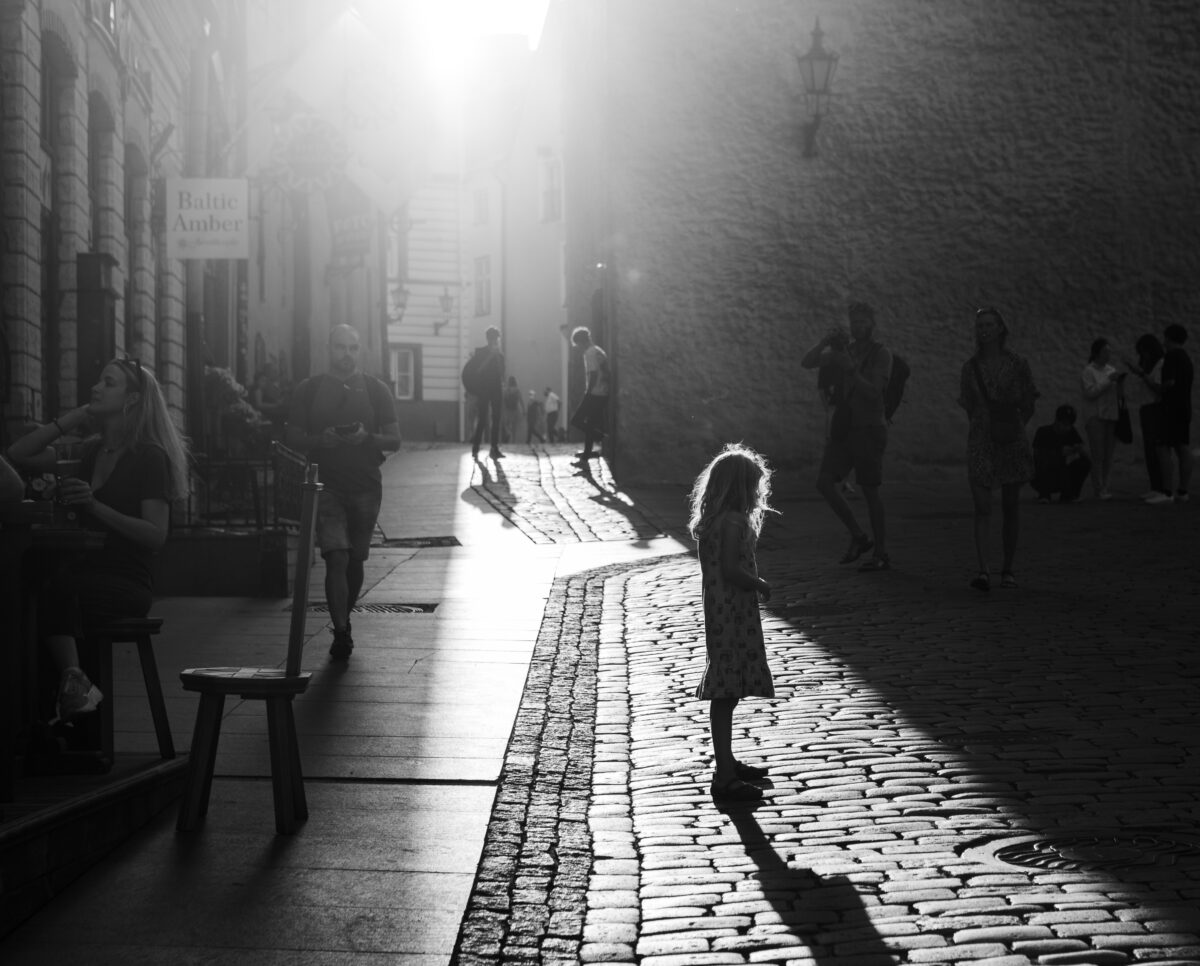
Do you have any favorite themes or projects you focus on when heading out into urban environments to photograph?
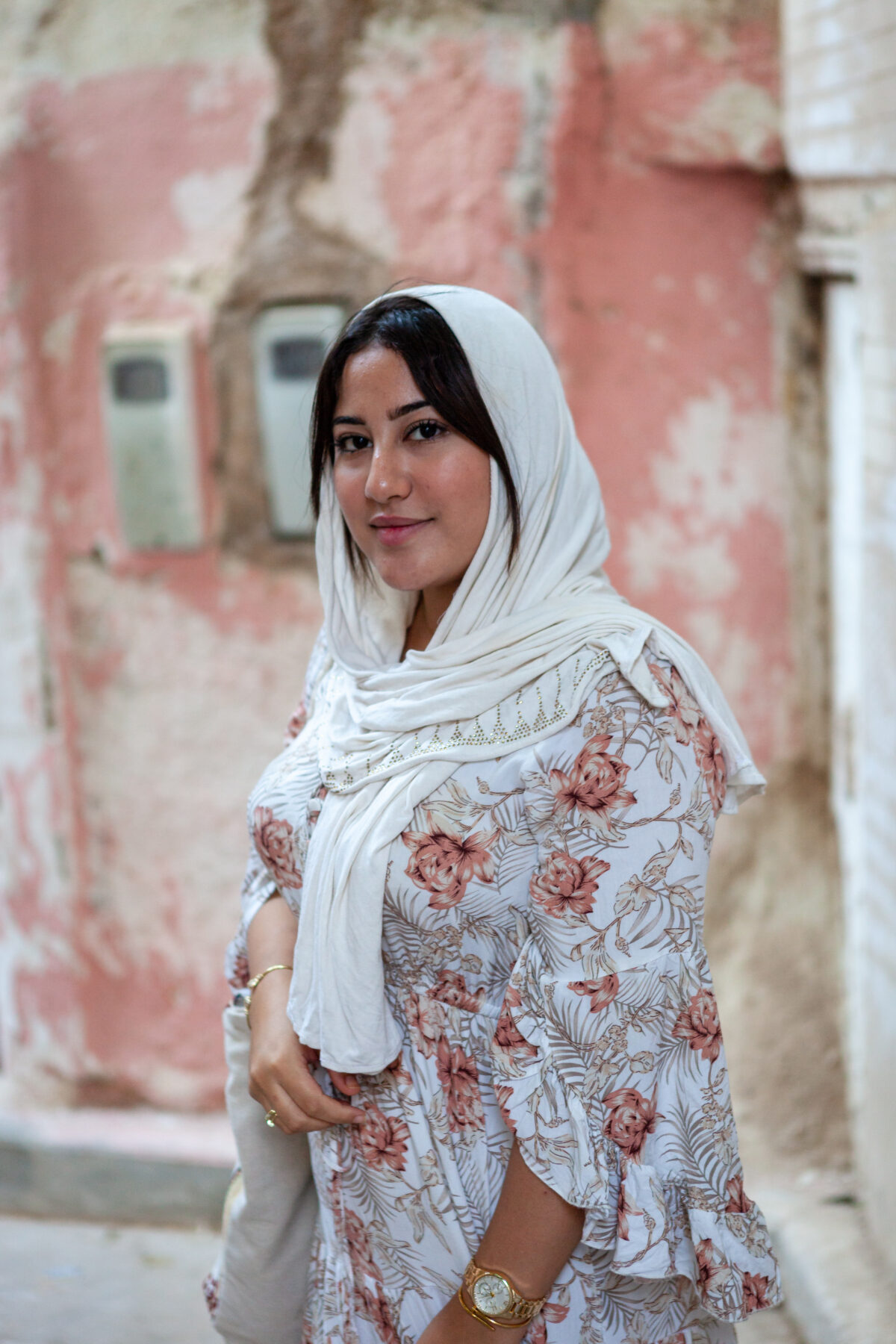
Lately, I’ve been going with the flow, but over a few years, I’ve accumulated a certain number of photos that I see as part of a series, although they’re not quite ready enough yet, in my opinion. One of my favorite themes has been taking portraits on the streets, but I feel it’s become somewhat devalued with the wave of TikTok. Still, there are so many interesting characters around us every day, and it would be great to capture them. Maybe I should continue with this theme after all.
How often do you manage to do street photography?
I don’t have a fixed schedule for when I go out shooting; it’s more a matter of time and motivation. At one point, I set a goal to go out at least once a month, but I think that’s sometimes too little. In summer, I tend to shoot more often. I try to always keep my camera in my bag, so if a moment arises, I can quickly grab it. Occasionally, I also take intentional photo walks on weekends. Even if I don’t capture a great shot, the day still feels worthwhile because I got to be outside and move around.
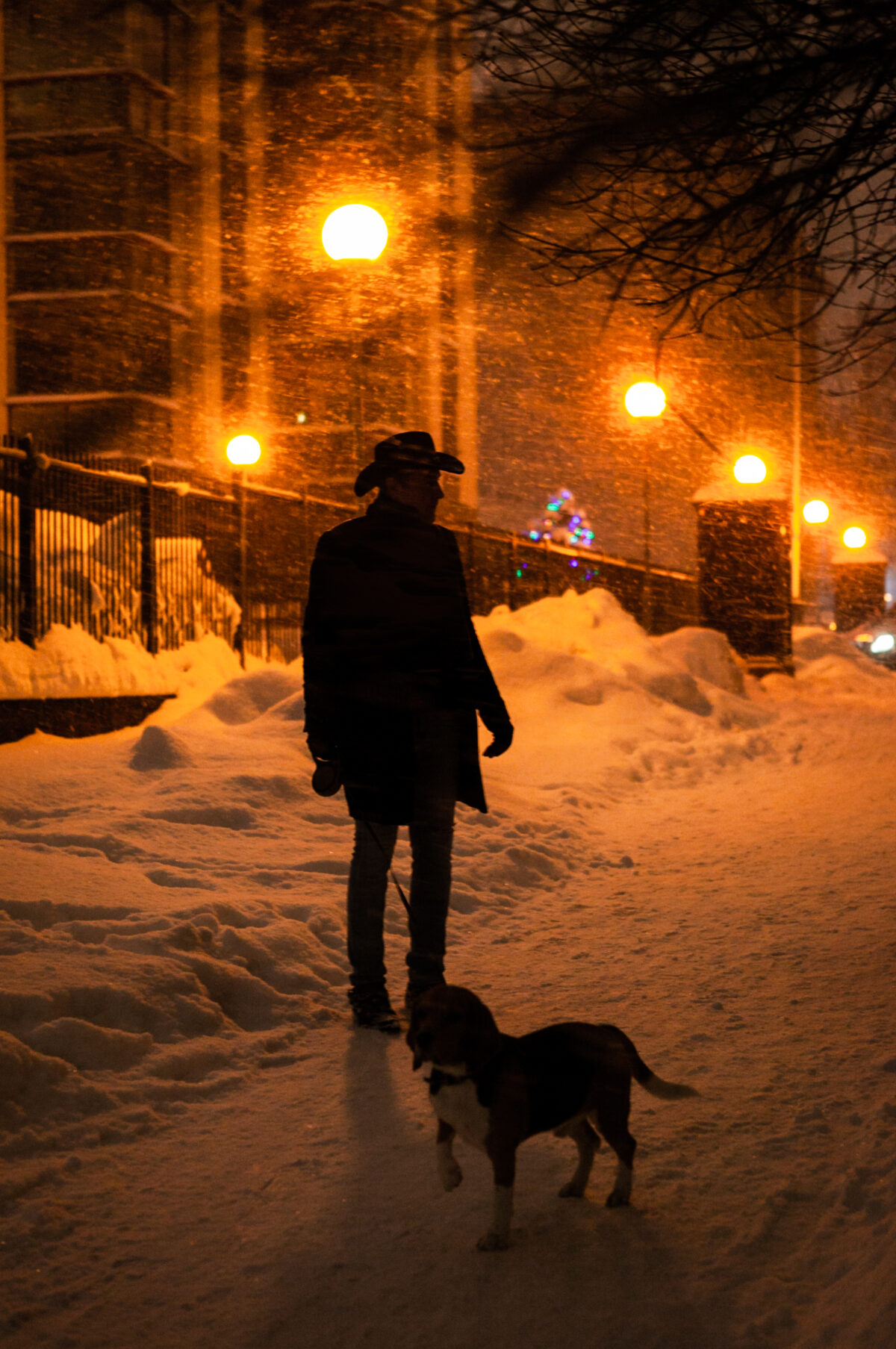
Do you have a favorite spot for photographing?
Not really a specific favorite, but I often find myself gravitating toward the Old Town or walking through it. Though, I could explore the suburbs more.
Do you prefer photographing abroad or in Estonia? Why?
That’s a tough question. It’s definitely easier to say that photographing abroad is better, because you see everything with “fresh eyes” and might capture moments more quickly than you would in your hometown. Big cities have more people to capture and more locations for photography. So, it’s nice to travel from time to time and gather inspiration from elsewhere.
However, I can’t dismiss Estonia either. It’s also interesting to photograph here, even though everything might seem familiar and already captured. It might happen that nine out of ten times, you won’t find anything new on familiar paths, but if that tenth time surprises you, it’s worth it.
I must admit that I sometimes get a bit bored photographing in Estonia, but that’s my own fault since I tend to shoot in the same places repeatedly, and that’s when you come back empty-handed. However, there’s still plenty to capture in Estonia. For instance, it would be great to document the charm of small towns, as it hasn’t been done much yet. So, I can’t give you a definitive answer—variety might be the key here.
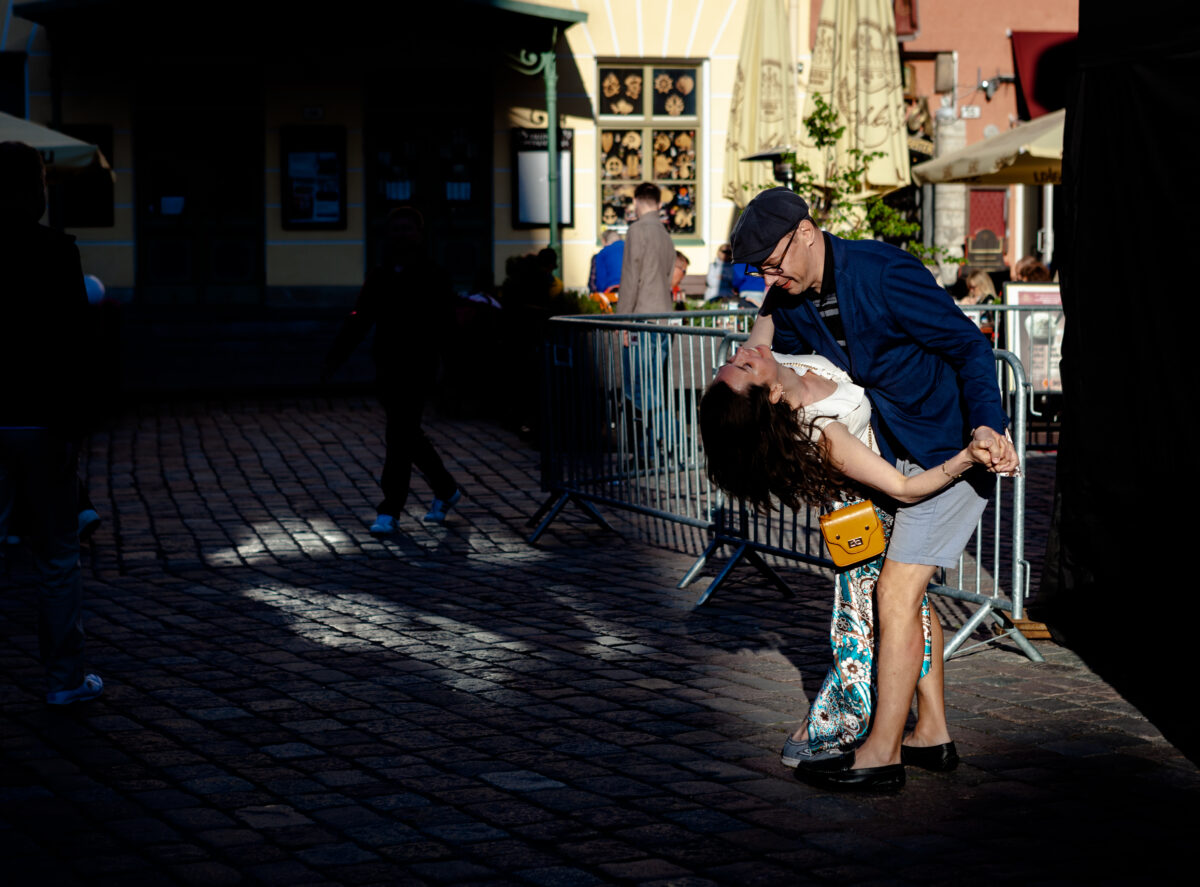
Are your photos more colorful or black-and-white?
For me, they’re more colorful, because I love colors, and it gives a more pleasant and complete feeling. In some cases, however, black-and-white works better, giving a more classic feel. It’s a matter of taste. Recently, I read Joel Meyerowitz’s book A Question of Color, and I must say, I was convinced that I’m still more drawn to color.
How much time do you invest in editing?
Not much, I usually do quick corrections. I don’t particularly enjoy editing, as it becomes somewhat monotonous. I used to spend hours experimenting, but I don’t see the point anymore. If you don’t capture a good photo in the camera, you won’t be able to make it much better afterward. Then again, who knows—now we have powerful AI.
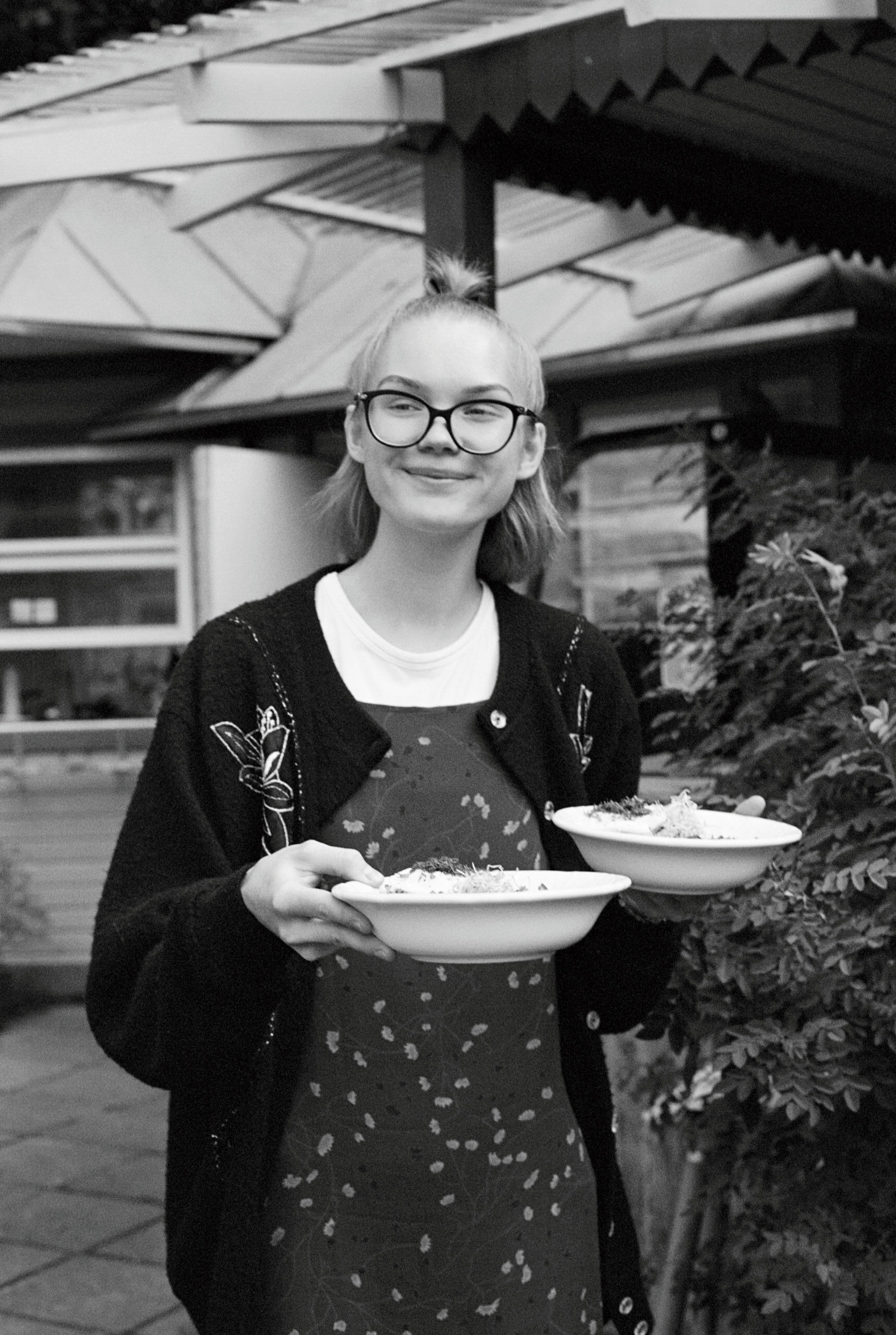
What equipment do you use for shooting? Do you think it plays a significant role in the final result?
I recently switched from Canon to Fuji. It takes some getting used to, but it’s comfortable, quick, and most importantly, compact. Equipment doesn’t play that big of a role for me as long as it works and I know how to use it. The basics should be clear, no matter what camera you use. Street photography often requires quick reactions or the ability to anticipate certain situations and adjust your settings accordingly. I’ve missed opportunities because of this, but you learn best from your own mistakes.
Do you think a phone is suitable for street photography? How often do you use your phone for taking photos on the streets?
Definitely. It depends on how you approach it. It’s a shame when people forget to clean their phone camera lens before taking a photo. I’ve been trying to use my phone more often when I notice something interesting. Sometimes, I feel that I don’t grasp the frame as well on the phone as I do with a camera. The phone tends to give a more flat impression, which I don’t particularly like. I’ve taken snapshots with my phone, but for some reason, they’ve ended up just gathering dust. Lately, I’ve been trying out short videos instead.
What advice would you give to those who want to share their street photography and get feedback?
I’d suggest joining various (street) photography groups, including international ones. Some of them host different competitions or challenges where you can get direct feedback. I think that Urban Street Photography is one of the most active groups. It’s often enough to just search “street photography.” Lately, new groups have been popping up like mushrooms after rain.
There are also new platforms like Discord, where a foreign street photographer, Samuel Lintaro, for example, runs a group.
You keep an eye on international photographers — where do you think is the best place to explore and follow what’s happening elsewhere in the world?
The easiest option is to stick with the platforms you’re used to, like Instagram, Facebook, and YouTube. Join street photography groups, see what other photographers have done, and you’ll be able to learn, grow, and stay in touch with what’s happening elsewhere. On Instagram, there are curated galleries that feature various street photographers, such as @streetphotographyinternational, and it’s become a trend for street photographers to share others’ work in their stories as well.
Do you have any tips for beginners or perhaps a book recommendation that’s particularly inspiring?
Lately, there have been quite a few new books published, but I’d definitely recommend two for beginners: Matt Stuart’s Think Like a Street Photographer — a simple, inspiring, and engaging book to start with and gather tips. Plus Sean Tucker’s The Meaning in the Making, which is more philosophical but, in my opinion, a must-read for all creative people. It’s a book worth keeping on your shelf to revisit from time to time.
Can you share the story behind one of your photos?
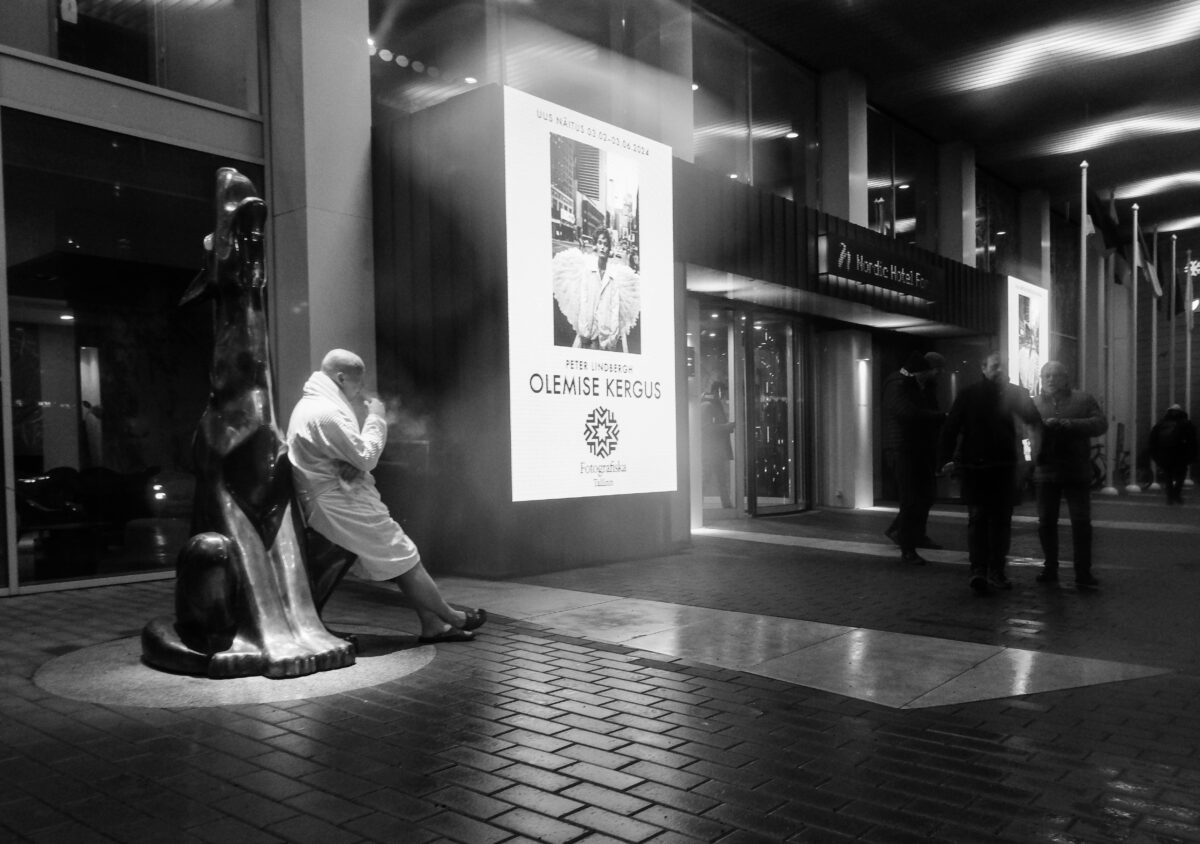
Sure. This photo was taken in February this year. Strangely, there wasn’t any snow on the ground, but it was certainly stormy, and it was pouring rain. After work, for some reason, I was more motivated than usual, so I grabbed my camera to take a walk around the city center.
I had been walking for a while, but nothing special caught my eye, and I was already quite soaked. I started heading home when, near the Nordic Hotel, I spotted a man in a bathrobe, smoking in the middle of the rainy weather.
I knew right away that I wanted to capture him because it seemed like such a surreal moment. Being a reserved Estonian, I, of course, didn’t dare to point the camera directly at him, so I kept walking and was already about to give up. But then I changed my mind, turned back, and took the shot. By then, my camera had gotten pretty wet, and it wasn’t cooperating much. Still, I managed to capture the moment, and although it didn’t turn out exactly as I envisioned, I was glad I found the courage to take the shot.
The smoking man with the advertisement for the Fotografiska exhibition saying “the lightness of being” somehow made the scene complete for me. I should also mention that the ad was moving quickly on the display!