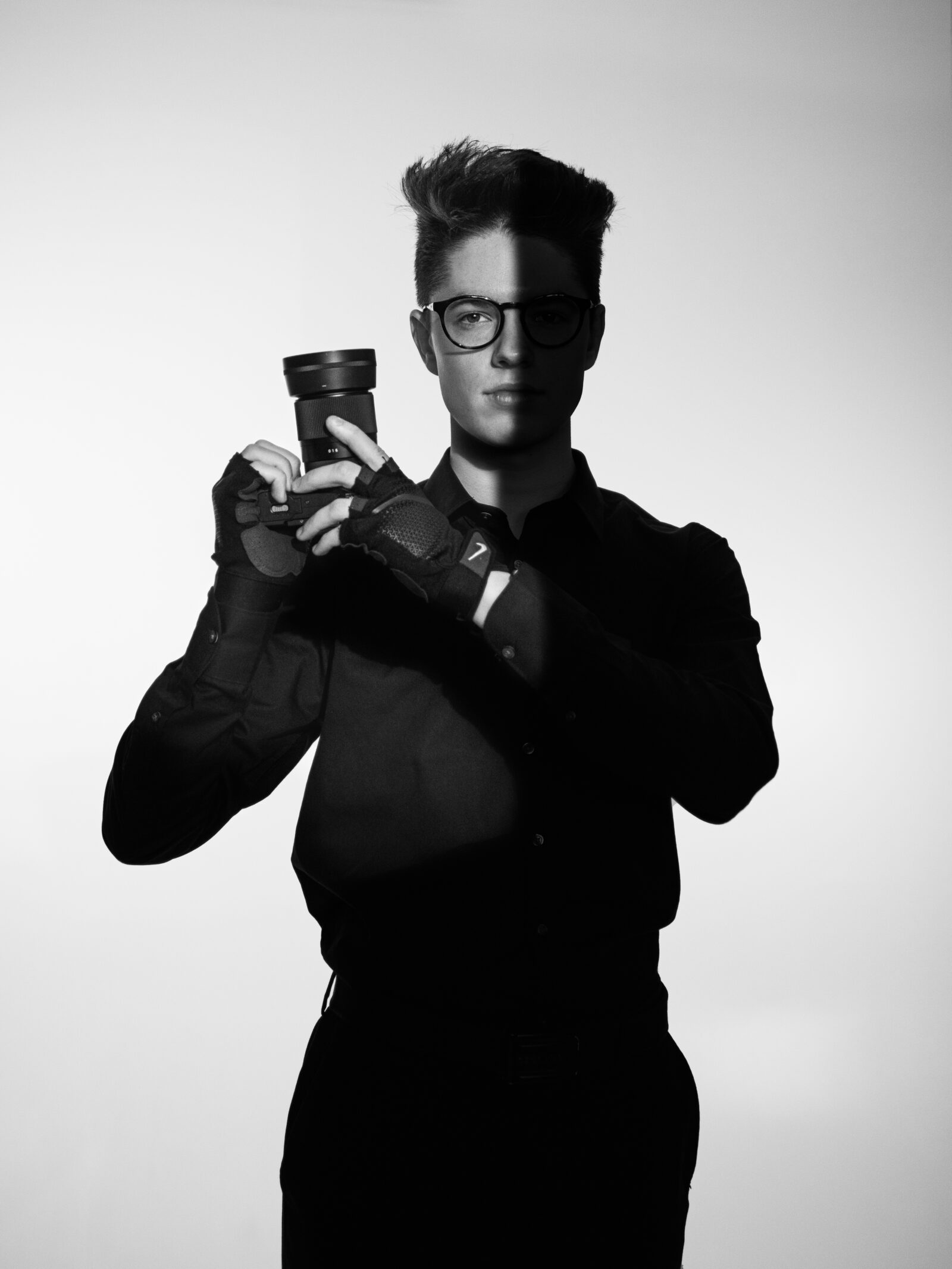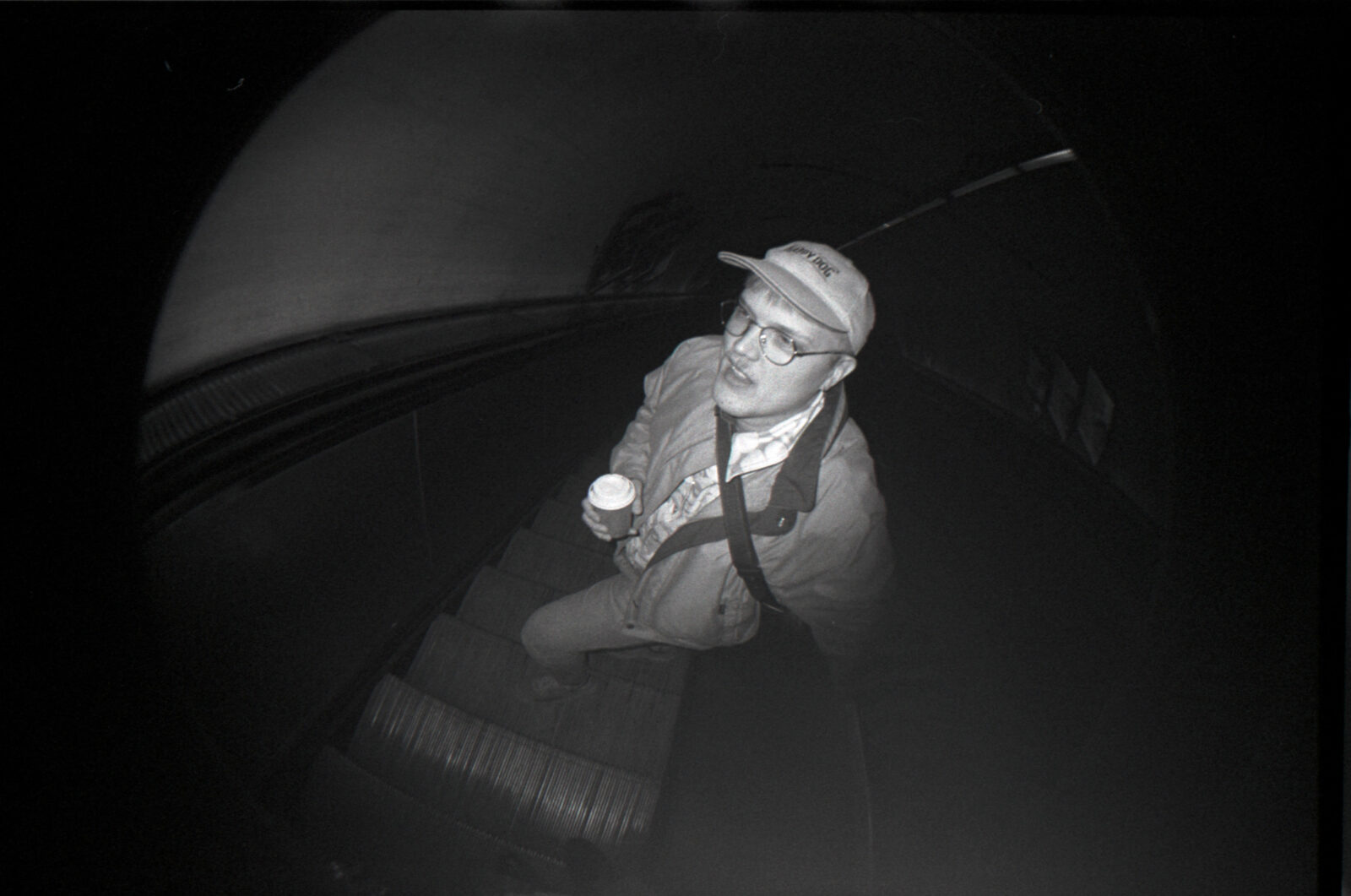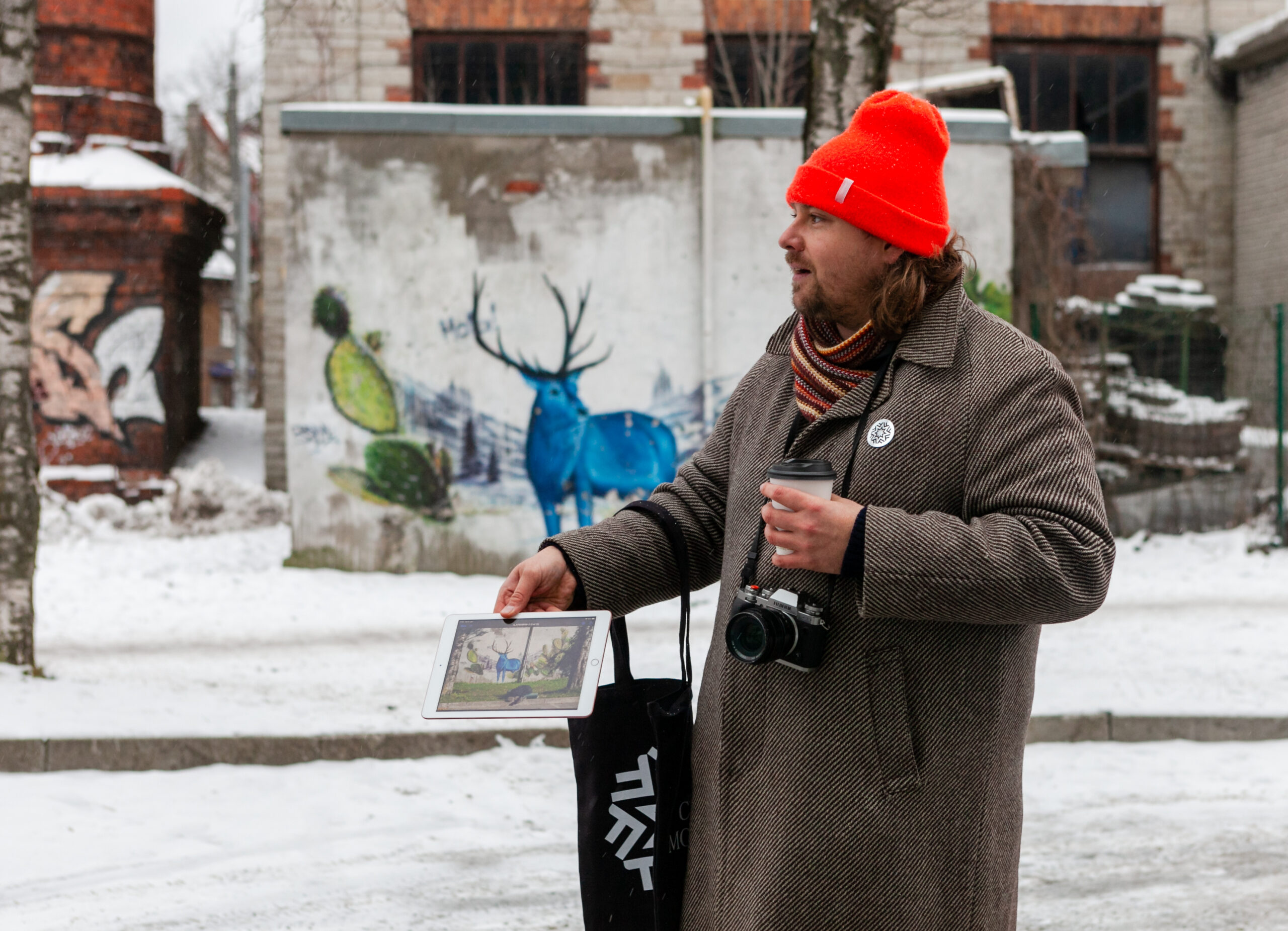
Photographer Aron Urb prefers to capture life on the street on the go. He documents his surroundings as naturally as possible. This often results in interesting situations and colourful characters.
In the interview, we talked about how he found street photography for himself, where he likes to shoot, what he thinks about Estonian street photography, how Fotografiska is connected to his work, and more.
What does street photography mean to you?
For me, it means capturing city life through a purposeful practice. Street photography should always say something—about society, culture, people’s lives, or what’s happening around us. It can be humorous or sad, but it should tell a story about our surroundings and evoke emotions or thoughts.

How did you discover street photography for yourself?
I think it happened quite naturally. When I started reading about street photography, I realised I had photos from 2008 and 2009 that are actually street photos. By photographing human activity on the streets, I understood that I was already making street photography. And once you discover it’s something you enjoy, you start investing more time into it consciously—and that’s how it has gone. It doesn’t always have to include people in the frame, but human activity—or its trace—should be captured in some form.

When you deliberately go out to shoot street photos, do you have a specific subject you’re looking for or hoping to find?
What I’ve learned is that you never really know what might come. For example, I have a winter photo where a gentleman is clearing snow off a small roof with a shovel, and a lady stands beside him with a very important expression, watching him work. I got that exactly because I was walking down my street with a stroller and suddenly saw the moment—and captured it. A situation like that can’t be planned. Of course, I can also set myself a goal like: I’ll go to the Baltic Station Market area (Balti jaama turg) and its surroundings, because I know something is definitely happening there, there are all kinds of people, and the environment supports shooting.

Do you have favourite photographers you follow or who inspire you?
I’m inspired by the sudden and distinctive Martin Parr, who has a very bold visual language—and sometimes people say it’s even too honest. From earlier generations, I’d highlight Henri Cartier-Bresson for his powerful compositions. Vivian Maier’s outstanding street photography collection also stands out for her ability to find great moments and characters.
Of course, I also follow the Estonian street photography forum, where there are some really strong photographers, and there are street photography accounts on Instagram that repost the work of different photographers. When it comes to contemporary street photography, I follow channels that give access to many different photographers—this gives versatile inspiration from one source. On Instagram, for example, I keep an eye on: @streetphotographyinternational, @gregforaday and @davidgibsonstreetphotography
How do you think Estonian street photography is doing today?
If I look at just the past year from a personal perspective, it’s going very well. The Dokfoto Centre exhibition “Väljavaade – 40 aastat tänavafotograafiat Eestis” (“Outlook – 40 Years of Street Photography in Estonia”) was a very pleasant surprise—I wouldn’t have thought it was possible to present such a strong overview of Estonian street photography to viewers. Naturally, it was even more of a joy to take part with my own work. In addition, in cooperation with the Northern Tallinn district, I had a pop-up street photo exhibition “Möödudes tabatud” (“Caught in Passing”). And the new year already started with Fotografiska photo walks, where I present my best street photos and participants can also try street photography themselves. The popularity of street photography is connected to the fact that more and more people are active in urban space, and they’re interested in making sense of it—either by viewing images or creating frames. Of course, street photography can also be practised in small towns and villages. For example, I have some really cool roadside village frames from the Peipsi area, where people are going about their lives and doing things.

How did the Fotografiska photo walk come to life?
Fotografiska got in touch and suggested that I could be a suitable photographer to lead a photo walk. In addition, I proposed showing photos and telling the stories behind how they were made. It turned into a pretty dynamic combination of walking, shooting, and photographic art. The first photo walks have been done, and it’s clear that participants liked the variety of the event. The photo walk format has also given me a positive boost—when a photographer talks about their photos, it helps you understand your own ideas and develop them further. And of course, teaching others always helps you learn as well.

Do you have a favourite place where you like to photograph?
I don’t really have one favourite place. I mostly carry a camera with me whenever I’m moving around, and the photos come from shooting on the go. Of course, there are contrasting examples like the area around the Baltic Station Market, where you still find old-school kiosks and interesting characters. But most photos happen during everyday life—you just need to keep your eyes open and be ready to capture what life offers.

How important is equipment for you?
It doesn’t really matter what you shoot with, but on the street I mostly use a Fujifilm X-T3 with a 23 mm lens. With a prime lens you have to work harder—you only get the frame by moving and adjusting. And when you put more effort into a photo, they tend to come out better. But of course, you can also get lucky: you’re walking along and life brings the perfect moment right under your nose.

If you had to choose: candid (photographing a subject without them knowing) or a staged photo—which would you choose?
I definitely prefer moments where the person doesn’t notice me—because as soon as someone sees a camera, they no longer behave the way they normally would. So the most natural result possible is important to me, and in my everyday work documenting events I also prefer capturing people in their natural state. Of course, in some situations you do have to adjust or arrange things, but I still prefer catching the real moment.

When you shoot street photography, would you prefer doing it at home or abroad?
In the current situation it’s hard to go anywhere, but I’ve thought that I’d be especially drawn to cities I haven’t visited yet. For example, I’d really love to go to Japan—it seems very, very interesting in terms of cityscape. Even in Tallinn we’re used to staying around the city centre and Kalamaja, but we could also go more to places like Mustamäe and Õismäe—and of course think beyond Tallinn too, because you can already start there. In summer I visited Sillamäe, which was a great experience, because it was an urban environment I didn’t know, and the joy of photographing was bigger as well. So in fact, domestic travel is completely enough to broaden the reach of street photography.
Please describe the story of how you got one of your photos.

I was riding a tram home when suddenly the tram stopped before the next stop, and the driver announced that we weren’t going any further. From a distance I saw that someone had driven into the tram ahead, and there was a lot of commotion around it. I immediately guessed I could get good material from the side, and I hurried over—because the guys working around the car were starting to move away. As a result, I captured a tram driver with a very telling expression, colourful characters bustling around the car, and of course, as a humorous bonus, the sign on the side of the tram: “You’ll get there faster by tram.” The tower of St. Olaf’s Church adds extra visual punch to the image. To my delight, this photo was also shown at the Dokfoto street photography exhibition “Väljavaade – 40 aastat tänavafotograafiat Eestis” (“Outlook – 40 Years of Street Photography in Estonia”).

What do you recommend to others—how can someone become a good street photographer?
You simply have to spend time photographing. Of course, you should also look at other people’s work, because in my opinion that’s the best way to learn. If possible, also communicate—talk to other photographers—because moving ideas around always helps with self-development. Practice, communication, and simply going out and doing it. How you spend your time is what creates the result.
And I recommend David Gibson’s book “The Street Photographer’s Manual”—a very strong overview of different styles, with guidance.

So you should always be ready to shoot?
Basically, yes. Of course there are places where the chances of getting a “great” street photo are higher, and places where they’re lower—but even on the photo walk we saw along the entire route that wherever there is human activity, it’s possible to make a picture.

You can see Aron Urb’s photos on Instagram: @aron_urb