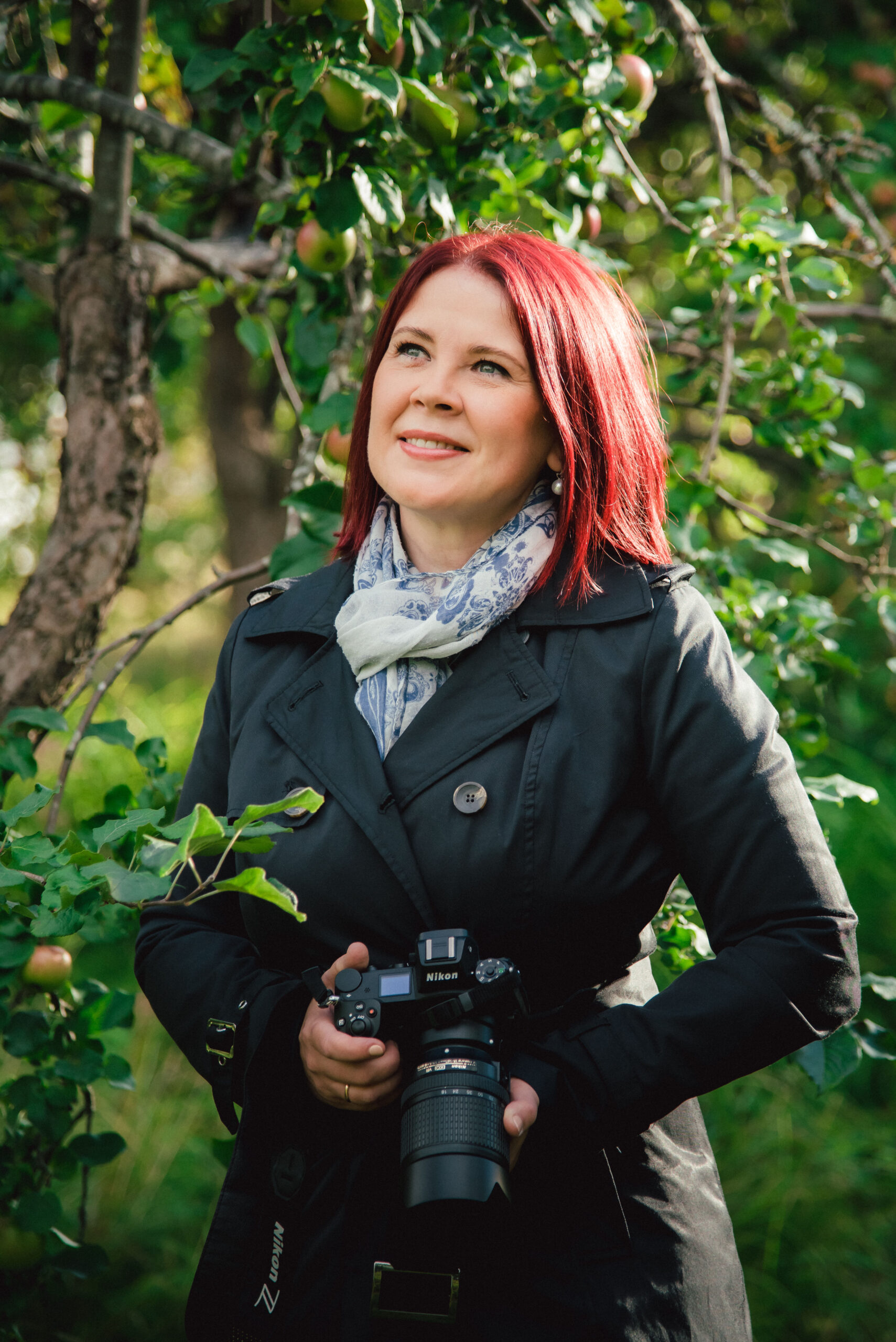
Kati Raudsepp is a creative and keen-eyed street photographer who mixes together nature, people, and light in perfect harmony. Influenced by art and theater, she captures the poetic randomness of life, revealing the depth and beauty hidden in everyday moments.
We spoke with Kati about her distinct use of color, the art of capturing the moment, and street photography in a broader sense.
How and when did you discover street photography?
I started getting into photography about seven years ago. From the very beginning, among other things, I enjoyed capturing people and situations on the street, even though I wasn’t yet aware that street photography was an actual photography genre. My deeper connection to the street photography began around five years ago when I happened to join a street photography Facebook group and later participated in a workshop led by Airi.
What does street photography mean to you? What draws you to photographing in the streets?
For me, street photography is the purest form of a hobby. I mean that while I initially started photography as a hobby, it gradually turned into work and involved tasks I “had to” do. But with street photography, I don’t have to do anything. I shoot when I feel like it, and if I don’t feel like it, I simply don’t.
What I love most about street photography is its spontaneity and almost complete lack of pre-planning. I also do portrait photography, which requires a lot of preparation—choosing a location, planning poses, directing the model, and so on. The final result also has to meet the client’s expectations, which sometimes might be completely different from my own vision. In contrast, on the street, I have total freedom to capture exactly what feels interesting and meaningful to me at any given moment.
Who or what has influenced you the most in photography? Do you have any role models?
Years ago, I discovered the work of Chinese photographer Fan Ho and was completely mesmerized—especially by the way he captures light. In fact, my desire to capture light in a similar way was one of the main reasons I started wandering the streets with my camera. But achieving that kind of light myself has proven quite elusive so far.
I also admire the classics like Henri Cartier-Bresson and Vivian Maier — particularly how they manage to turn everyday moments into iconic images. I love William Klein as well, especially for his genuine, heartfelt interest in the people he interacted with and photographed on the streets.
Beyond street photography, one of my absolute favorites is Annie Leibovitz. What captivates me about her work is her ability to create a seemingly chaotic scene where every detail is perfectly in place, forming an intriguing composition with multiple layers and nuances. That would be an invaluable skill in street photography as well.
I’m also influenced by films, music, literature, and theater. All these elements blend into a kind of “rosolje” (a type of salad with herring, potatoes and beetroot – AH) in my mind, and it’s impossible to single out a specific “ingredient” that stands alone.
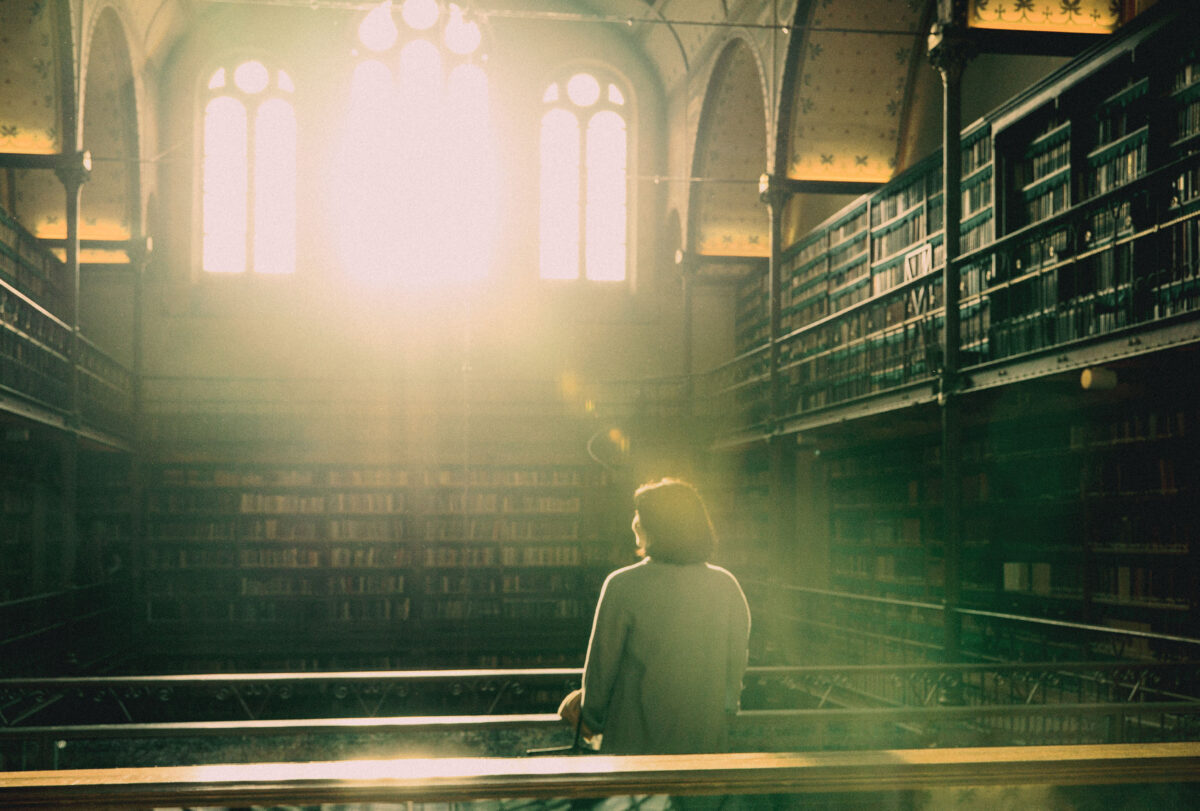
You’ve created several photo series inspired by Edward Hopper’s work. How did you discover him, and what resonates with you the most in his style?
I stumbled upon Hopper completely by chance when I came across the Facebook group called Inspired by Edward Hopper. Some of the photos in that group resonated with me because they captured something I’ve always tried—consciously or unconsciously—to convey in my own photography. That led me to research Hopper and his work in more depth, and I found it incredibly inspiring.
Hopper’s paintings depict everyday life, cityscapes, and landscapes. Although he never wanted to be classified under any particular artistic movement—saying he simply liked painting houses and light—he is now considered a pioneer of American Realism. The connection to street photography is quite clear!
It’s difficult to put into words exactly what draws me to Hopper’s work. There’s an indefinable something in his distinctive use of color, the ever-present light in his paintings, and the sense of solitude that pervades his work. Even when his paintings feature multiple people, they still seem to exist in solitude. And even when there are no people at all, that feeling of solitude is still there. To me, it’s not a sad or melancholic kind of loneliness, but rather an inspiring one.
My absolute favorite writer is Dostoevsky, often regarded as one of the greatest observers of the human soul. For me, there’s an inexplicable similarity between Dostoevsky’s in-depth explorations of human nature and Hopper’s silent, solitary figures. What are they thinking? What kind of lives do they lead? What do they love, and what do they hate? Someone once said that Hopper’s paintings are like scenes from a film—you want to know what happens to the character in the next frame. That deeply resonates with me and makes me want to capture similar emotions in my own photography.
Your images have a very distinctive color palette. How much emphasis do you put on post-processing, and how important is it in the overall composition?
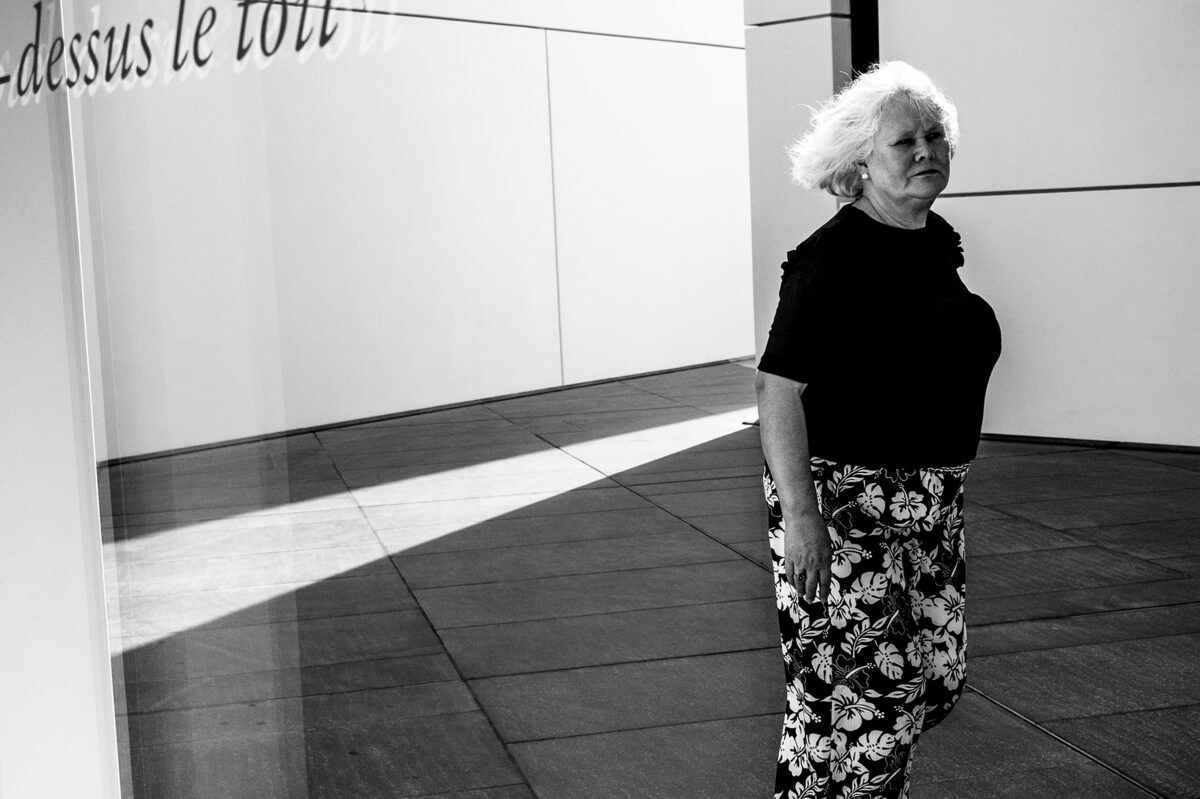
Not all of my photos are colorful—I also shoot a lot in black and white. But in most cases, I consider post-processing a crucial part of the final image. If we think of photography as capturing facts, then color tones and mood can give these facts an emotional depth that brings them to life. Without it, they might just remain dry facts.
Your photos often feature bold colors and open space. What matters most to you when taking a picture? Are you primarily looking for aesthetic and compositional angles, or do you have other goals as well?
It really depends on the situation and the specific image. Aesthetics and composition are important, but the most essential element is whether the image tells a story—whether it has that spark of life. Ideally, aesthetics and composition support and enhance this. But if an image is only aesthetically pleasing without a deeper meaning, it may be visually attractive but feel somewhat sterile.
How often do you go out to shoot street photography?
I used to try to go at least once a week, but lately, unfortunately, it’s been less frequent. At one point, from the spring of last year until the end of the year, I took a long break from street photography. I just didn’t feel like doing it—it seemed pointless. But luckily, that phase has passed, and I’ve already gone out a few times this year.
You also shoot a lot abroad. Is it easier to find interesting shots in a new environment, or does it not really matter where you are?
Both, in a way. On one hand, a foreign environment is always more exciting and offers many new visual opportunities. On the other hand, when I’m abroad, I’m never alone—I’m always with people who aren’t into street photography (or photography in general). That means I have to shoot on the go, without dedicating time specifically to photography. In Estonia, I can go out and shoot entirely at my own pace.
You recently launched a new website. How difficult is it to showcase your work? Do you think street photography will always remain more of a hobby than a profession?
Creating the website was a long and slow process since I had so little time for it alongside work and everything else. It was mainly made for my nature and portrait photography. And during that long process, I changed my mind multiple times about whether or not to include my street photography portfolio. In the end, I decided to include it because it’s an important part of who I am as a photographer.
For me, street photography will definitely remain a hobby. I don’t see myself marketing or selling my street photos—it would require a completely different approach and target audience than nature or portrait photography. In general, selling street photography in Estonia is challenging, though not impossible. But it requires serious dedication and consistent visibility, along with a well-thought-out and persistent marketing strategy, which all take a lot of time.
Do you have any tips for beginners?
Maybe two things that might seem contradictory at first. First, stay true to yourself — shoot what interests you and in a way that feels right, even if it doesn’t seem to resonate with others. Second, don’t take yourself too seriously — don’t get upset by criticism, but try to learn from it and grow.
Could you share the story behind one of your photos?
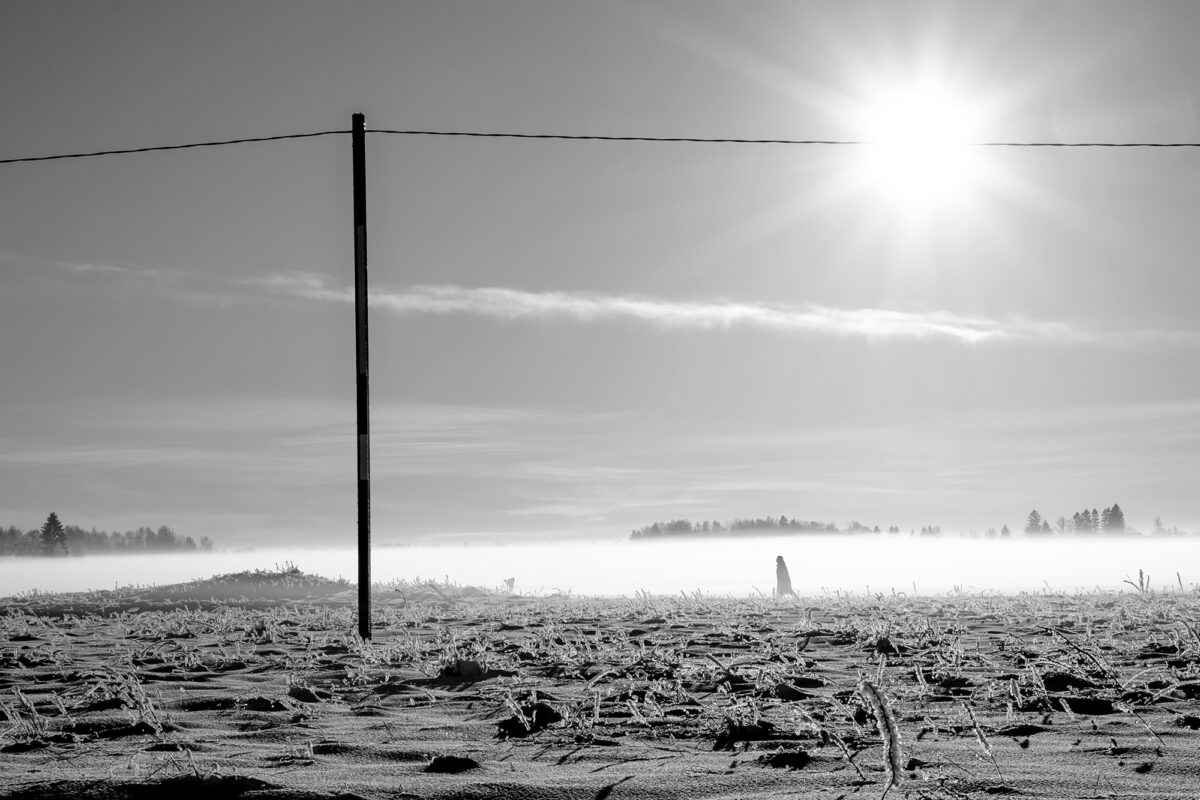
I chose this photo. Its story isn’t anything particularly remarkable. However, what makes it interesting to me is how the vague, unspoken “story” I initially associated with it later took on a clear meaning—several years after I had taken it—thanks to a theater performance and a song. In a way, it’s a peculiar example of a photo gaining retrospective inspiration.
The photo was taken a few years ago on a cold winter day while I was driving along the Tallinn-Narva highway with a car full of friends. The sun was shining, the air was freezing, and an unusual mist hovered just above the ground—something uncommon in such weather conditions. Everyone in the car was eager to reach our destination quickly. But as a photographer, my heart started beating faster at the sight unfolding outside the window. So, taking advantage of my position as the driver, I pulled over for a quick stop.
To save time, I stayed right by the roadside and began photographing the landscape. Another car also stopped nearby, and out jumped someone just like me — camera in hand. Unlike me, though, this person had no impatient passengers watching the clock, so she joyfully ran further and further across the field, snapping photos. I cursed under my breath a little, as they kept stepping right into my frame when I already had so little time.
But when she reached a spot beneath the distant power lines — where the low winter sun seemed almost tangled, I found myself watching her instead. Suddenly, I started composing my shots around her.
I liked this photo from the moment I took it — particularly for its slightly otherworldly, almost cosmic atmosphere. The bright, sunlit snowfields also reminded me of something from Dead Mountaineer’s Hotel.
A couple of years later, I went to see Notes from Underground at the Tallinn City Theatre. I loved the performance, but even more so, I was captivated by the songs performed by Hele Kõrve. One particular song struck a chord with me, and later, while trying to find it on YouTube, I discovered its original version—Adelaida by the band Aquarium.
“Tuul, udu ja lumi. Majas oleme vaid me kaks. Ära karda kopitust aknale – minu juurde tuldi. See on põhjatuul. /…./ Ta teeb nii, et pilved hajuvad taevast, seal, kust tõuseb täht Adelaida ….”
I fully understand that these connections might not be apparent to others. For some viewers, this image might evoke entirely different associations. And some might even ask—where is the street in this so-called street photograph? But that doesn’t really matter.
Where can people find your work?
A selection of my favorite images is available on my website: katiraudsepp.ee. I also share more of my street photography on my dedicated Instagram account: @katiwalksthestreets.