There aren’t many well-known names in the Estonian street photo scene, but Martin Lazarev is one of them.
Twelve years ago, this gentleman photographer escaped from cold Estonia to tropical Brazil, and tells us about the beginning of his career and the behind-the-scenes of shooting.
How did you get into photography?
Photography is a medium that appeals to most people, and we’ve all admired photographs in a book or at an exhibition, while feeling a quiet wish inside to capture images like that ourselves. It’s a strange, subconscious sensation that pulls you into the image and creates the desire to find or create a similar moment.

From the very beginning I was interested in nature, and instead of a magnifying glass I dreamed of binoculars to observe animals and insects (and I did eventually get those binoculars). The ability to observe and notice, the waiting for the right moment, and simple yet extraordinary beauty—that’s the calling.
But I got to photography more directly through the photo lab of my parents’ silk-screen printing studio (there was even a 50 kg roll of photo paper in the corner of the lab), and my sister Vanda also did photography, shooting with an old Moscow camera. So I was able to experiment and watch what was happening in the lab. I also took a small photography course at Tartu Art School (my first Ilford films and papers, and real photo experiments with my classmates).
After that I moved toward graphic design and started working as a designer. I dealt a lot with advertising photos and retouching. I observed and learned smoothly from everything I saw. Part of a designer’s job is also to stage photo shoots and direct the photographer when needed. Through that, it became clear that staged and posed photography isn’t really what I would want to capture myself. At the same time, I wasn’t doing photography myself—I wasn’t shooting.

Why Brazil? How did you end up there, and how did you start photographing life there?
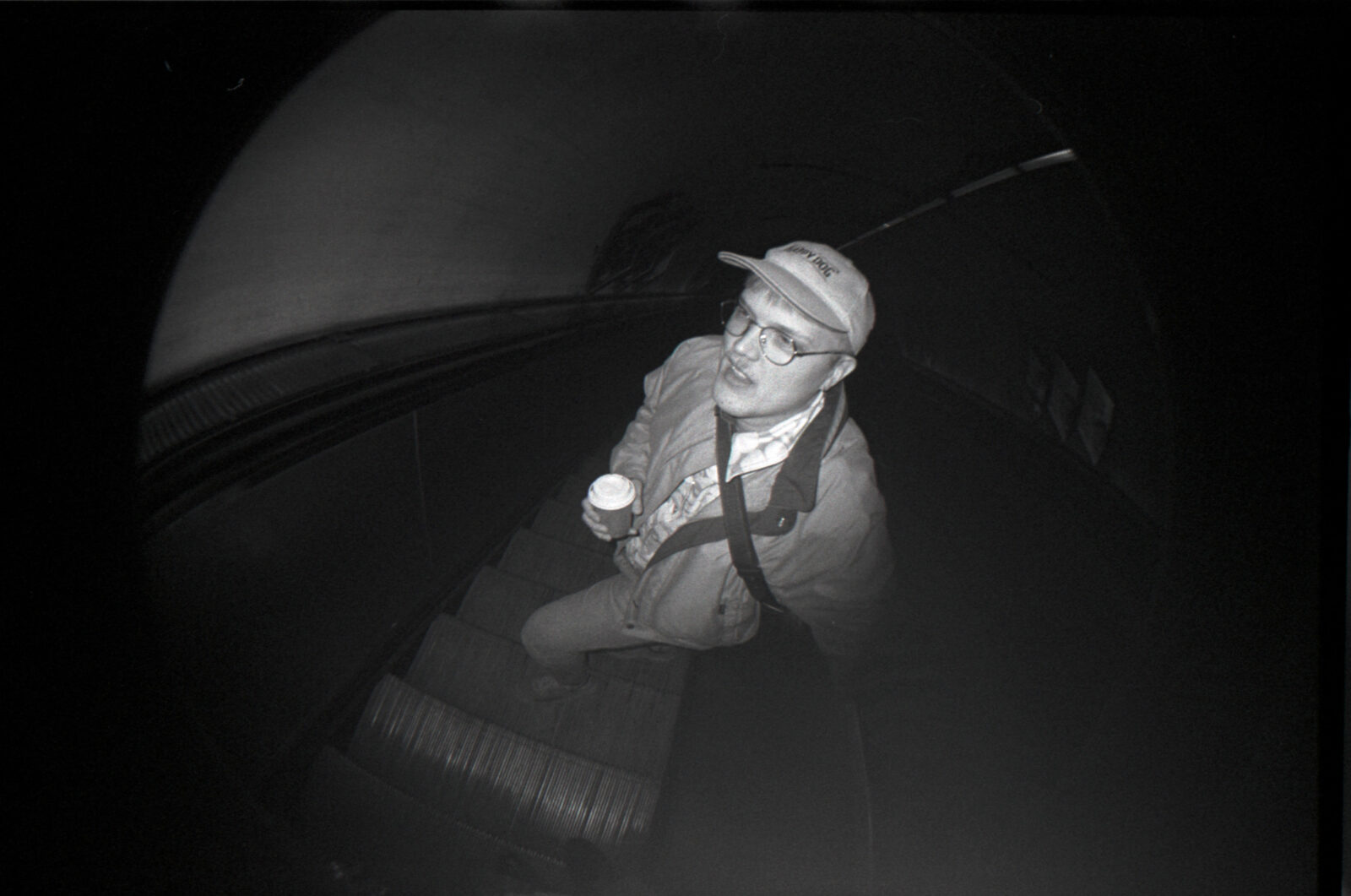
To answer that, I first have to mention my good friend and photographer Vahur Puiki, who was the still photographer for the film “Revolution of Pigs” (premiered in 2004). His black-and-white analogue photos were what gave me the momentum and interest to return to photography and start shooting myself. His portraits of the young actors and film crew, made on set, were especially inspiring. Simply outstanding!
So I decided to start photographing myself, and I knew for sure it would be in street photography and reportage style: capturing moments and details that life offers… if you look!

And that’s where Brazil comes in, because I knew I wanted to shoot outside the studio and needed more movement and a special/different environment. Brazil seemed then—and still seems now—a very good choice for that. India would already be too typical a destination for a photographer.
Good light, lots of people, open communication, and wildly thriving tropical nature and distinctiveness are what spoke in favour of Brazil. I jumped in headfirst into an unknown big puddle and have been splashing around (actually swimming) here for 12 years now.

Your photos are mostly colourful and very lively. Is that approach intentional or accidental?
I don’t deliberately plan a specific style, but it probably comes from my personality and my boldness to approach and communicate directly.
A photographer is reflected in the subject’s eyes like a mirror, if you know how to notice it. A lot happens in just a few seconds, and trying to catch it is extremely absorbing and exciting. Once the moment is gone, it’s gone. You can only hope that maybe a similar moment will come/return again someday—and often it does. Experience builds up, and the photographer starts seeing several moments a second before they happen, because human behaviour has certain patterns. So it’s possible to steer what’s happening a little.

Are many of your photos street photographs? Why this approach, and where did it come from?
I think 95% of my photos are street photos. I don’t have a studio, and I also don’t work continuously as a photographer. I mostly capture what I see while travelling and the situations I end up in—sometimes by chance, other times with the goal of finding moments. So it’s fair to say I’m a street photographer. The idea is not to work as a photographer, but simply to photograph.
What are you looking for or hoping to find when you go out with your camera?
Street photography happens when you leave home and step out onto the street—then things start happening and, if you’re lucky, you find a photograph. You never know in advance what exactly the day will bring. Whatever comes, comes, and this style is, in a way, even a form of meditation. When I go out on the street, I forget design work and become a photographer. A little role-play, if I may put it that way.

Many of your photos are made in very close contact, and you also shoot portraits. How do you usually approach people?
Over time, a street photographer learns and develops their own tips and tactics for how to approach people, enter situations, and exit them.
Shooting up close is a fine art, and you have to feel the boundary. You have to know people well and watch for signs. Often you need to manoeuvre skilfully and smooth over a tense situation that has arisen. All of that is part of street photography. A photographer has to be ready for it, and the better they master that art, the more exciting the photos are for the audience to look at later.
I communicate with people directly and often ask for permission, or I create a situation where I’m allowed to photograph. Trust has to form, but there are also moments where you have to move away quickly—before someone realises what happened. The situation justifies the means.

How would you describe yourself—portraitist, documentarian, or something else?
I would simply call myself Mr Photographer. 😉
What motivates you the most in photography?
The charm of details, light, colours, and black-and-white contrast in its simplicity that brings out a feeling. And definitely the coincidences and humour that come from life itself—yes, humour even in absurd or strange situations.

Do you have a favourite photographer, or who/what inspires you?
I follow the photographic art of many classic masters and constantly look for something new. There are many names—very many. In street photography, of course Henri Cartier-Bresson, Helen Levitt, Elliot Erwitt, Bruce Gilden, Shirley Baker, and Alex Webb. Also fashion photographer Bruce Weber, for example. I tend to follow black-and-white street photography in particular. Maybe it’s just one period in my own photography.
What is the strangest story or incident that has happened to you while taking photos?
While photographing in a favela in Rio de Janeiro called Santa Marta, a wildly tropical downpour started just as I was coming down the hill (I could tell it was about to rain). Water covered the entire road and at one point the ground disappeared under my feet and I fell into a sewage hole—luckily only one leg, and luckily that was all. What makes it funny is how I automatically saved the camera by holding it high