
Unfortunately, there isn’t one single clear answer to the question “what is street photography?”. I’ve been asked this quite a lot over the years as well, but sadly I can’t explain it briefly either. What is important to remember, though, is that not every photo taken on the street is automatically street photography.
The Estonian Wikipedia puts it like this:
“Street photography reflects people’s everyday life in an urban environment. The goal of street photographers is to capture unique moments and share them with others.”
While that is true, a large part of the information is still missing. But let’s leave that for now and approach explaining street photography from a different angle—through the rules, or rather guidelines, of creating an image. One thing is certain: a street photograph carries a story, and writing a good story requires skills—similar to arranging words into sentences.
In the visual world, instead of grammar and sentence structure rules, we have the rules of composition—the tools a photographer uses to communicate with the viewer. Luckily, composition is not a rigid set of rules, but rather guidelines for thinking about how to make the story you’ve captured more engaging and clearer to the viewer.
So there’s no need to worry if you feel you lack an inborn sense of composition—this is something you can learn and train.
Johannes Itten, a Swiss painter and Bauhaus art school teacher, told his students in 1920: “If you can create masterpieces without knowing colors, then ignorance is your method. But if you are unable to create a masterpiece with colors because of your ignorance, you should seek knowledge.” The same applies to composition.
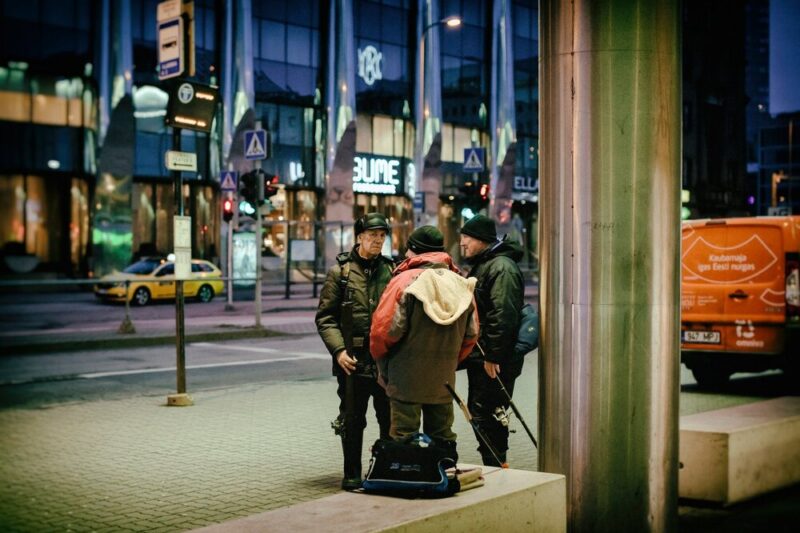
Street photography is a genre where knowing the rules of composition makes your life easier—and definitely much more interesting. The street is a place of complete compositional chaos. Hustle and bustle, cars, people, bicycles—lots of movement, and in the background many different details that tend to add unnecessary “noise” to the image. How is it even possible to think about rules in a situation like this? Believe me, rules don’t create extra pressure—on the contrary, they help bring order to the street scene. Without them, what reaches the viewer are distant street and city views that are inherently boring or belong to some other genre, such as architecture or travel photography.
The simplest way to learn the rules is to do it alongside practice. Choose a rule you like, go out into the street, and get started. Naturally, you should start with the easier ones—and what could be simpler than the rule of thirds.
The rule of thirds

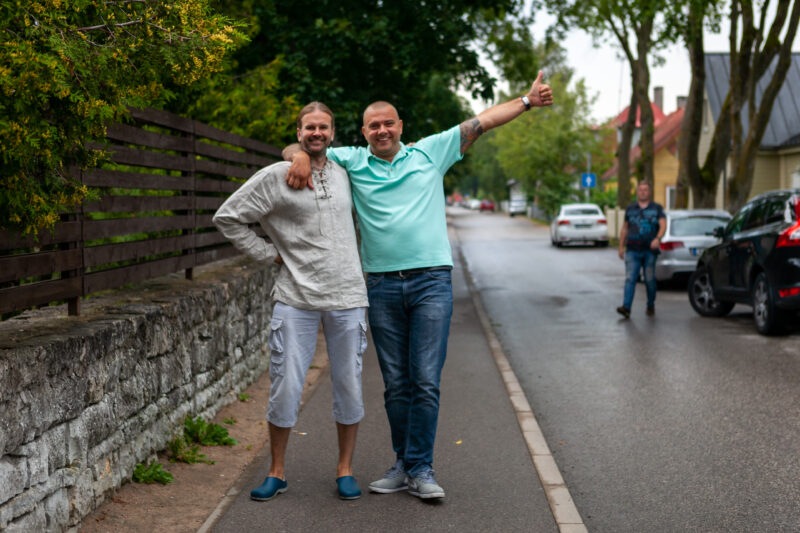
When using this rule, avoid excessive noise, look for an interesting background, or try to capture people in the frame so that they align with the third lines. This rule is great for making an environmental portrait—meaning a person and their surroundings—and it also gives you an excellent opportunity to make use of interesting backgrounds you find in the city scene.
Looking at the photos of Skander Khlif, we notice that most of his images are constructed based on the rule of thirds.

Frames within the frame
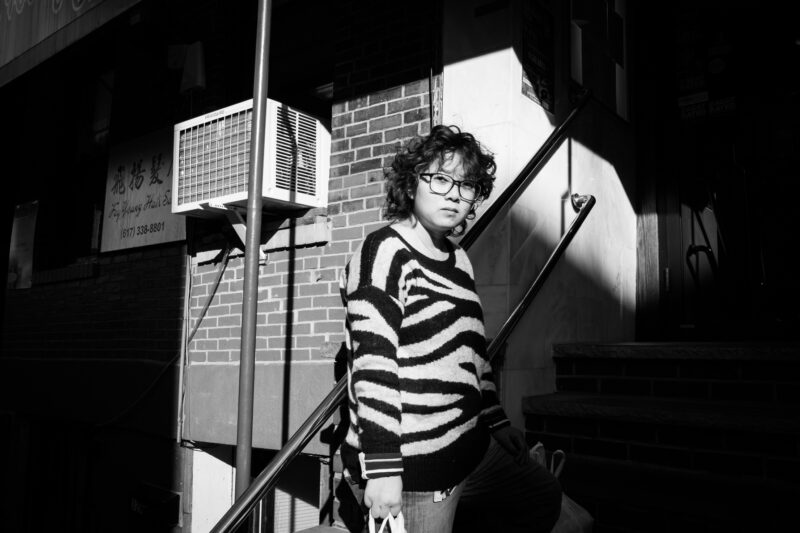
Once you’ve mastered the rule of thirds, add the next helper to your toolkit: using frames within the frame. Believe me, this is fun. Your task is to find as many frames as possible in the street scene and capture them in your photo. Frames can be—bus windows, bridge arches, a hole in a wall or fence, an underpass, or even an arch created by nature in the lattice of trees. Notice, there’s one “but”: in street photography a frame starts to work only when you manage to capture something interesting inside it.


After you’re done shooting, don’t forget the most important part: go through your photos thoroughly at home on your computer and analyze them—what works well and what could be better. Don’t be shy about adjusting your composition later on the computer; it’s part of the process.
If, as a result of practice, you’ve captured a photo that deserves to be shared with others, then be sure to share it in the Eesti Tänavafotograafia Facebook group.