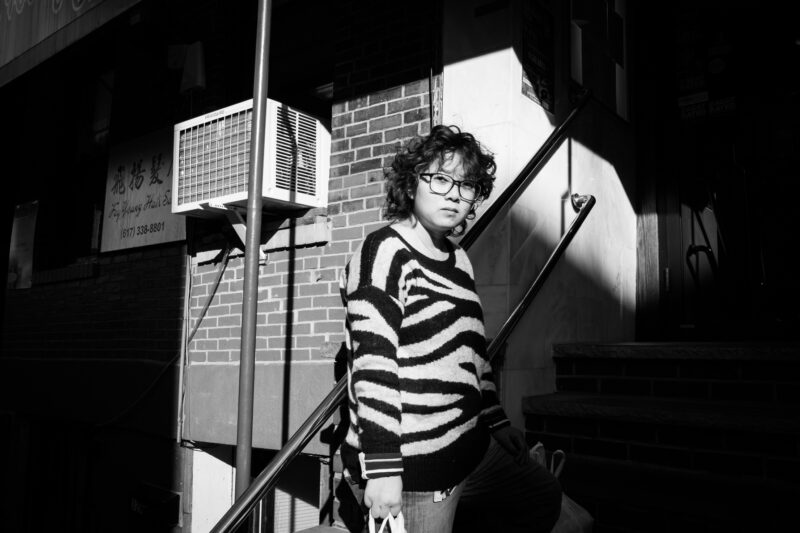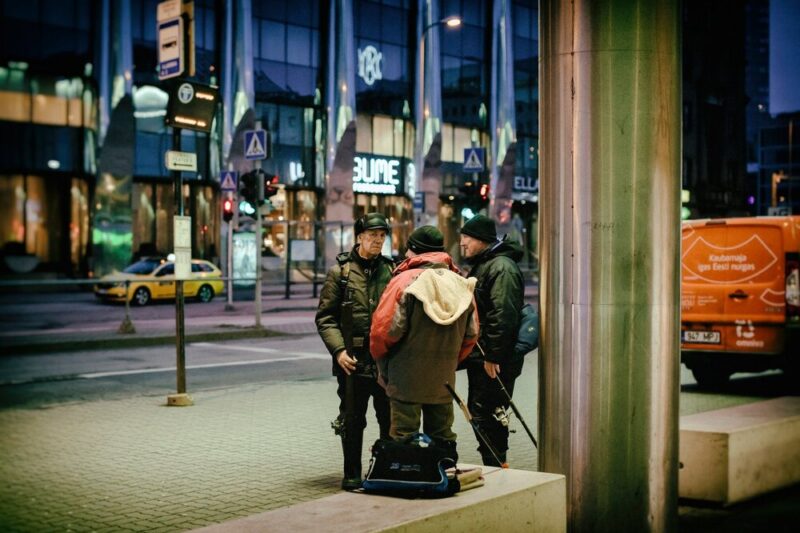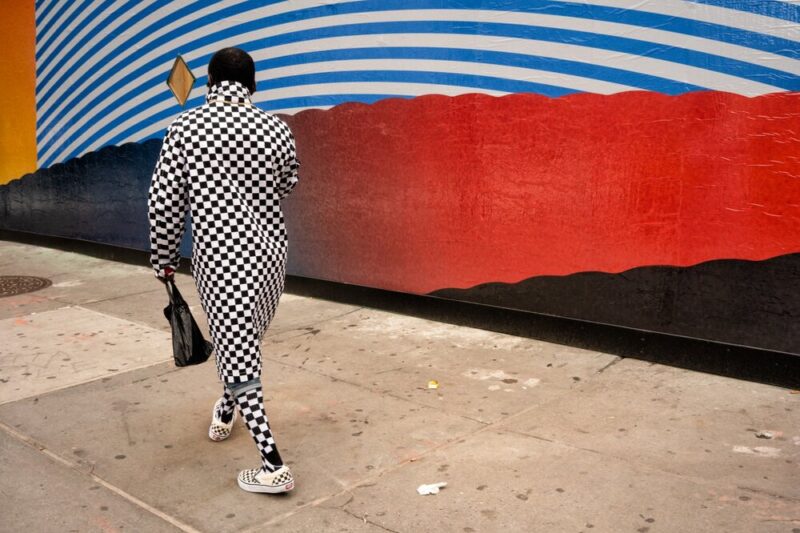


British photographer Matt Stuart attempts to find answers to this question in his book “Think Like a Street Photographer”.
Stuart’s advice is very simple and logical. We have probably thought about these topics at least once before, yet they may not always come to mind while walking the streets. Through vivid examples and numerous images, the photographer shares the tips he himself follows while shooting.
Each chapter offers insights worth reflecting on or reminding yourself of from time to time. In short, they can be summarized as follows:
- Go out with a positive attitude and accept the so-called bad days as well. Stuart suggests repeating a mantra before heading out: “I will be lucky.”
- Go with the flow! If you notice or hear something that feels exciting, trust your instincts and try to capture it. Stuart quotes Robert Frank here, saying that “the eyes should learn to listen before they look.”
- Go out in any weather and always take your camera with you! If you don’t, you’re just someone who saw something interesting and told others about it—but has no proof.
- Stay calm! Be mindful of your body language, adapt to different situations, and if necessary, gracefully move yourself out of them. Don’t cling too tightly to rules—do what feels right to you.
- Practice, practice, and practice again! The more you do it, the luckier you become.
- Keep it simple! Don’t get overly caught up in the technical side of image-making—focus on the image itself (its content).
- Be open to everything and see the world through a child’s eyes! Stay curious and keep your eyes open.
- Shoot first and think later! Don’t miss your opportunity. Trust your intuition, otherwise you may regret it later. Photograph everything and everyone!
- Be kind-hearted! Consider how you portray people in your images. Take photos in good faith.
- Find a place you like or follow what initially seems interesting. React immediately to a potential situation. At the same time, sometimes you have to wait hours for a great frame.
- Stay alert! Sometimes life offers even better situations than you could have imagined. Street photography is like a grey area—it shows reality on one hand, but also its surreal side.
- Stay alert and be quick about what might happen next—observe the situation and people’s behavior. Keep your eyes open and listen to your surroundings.
- Try to understand when you should intervene and when you should not. This is probably the hardest to follow, as it is largely a matter of intuition.
- Observe specific objects or people’s gestures in the city scene. This trains you visually and mentally to see and think. According to Stuart, most images are like sketches, and certainly not all of them deserve golden frames—so accept and value them as they are.
- Humorous images don’t happen easily—they require repeated practice. At the same time, this theme should be approached with care.
- Engage the viewer! If something seems interesting, photograph it and think about the bigger picture. Maybe you can include more people in the frame and create relationships between them, or find an intriguing background element. Review both the center and the edges of the frame—they should form a cohesive whole.
- Step outside (your comfort zone)! Be open to different situations and environments, but also respect local rules (for example, in different countries). Street photography is a mindset.
- Be a street photographer everywhere! Show different people and places—you can do that anywhere.
- Think about connecting your photos into a series—find different relationships between them. The beginning and the end should be strong. Stuart recommends printing the photos when editing a series, as it gives a better overview. In this process, consider the placement of images—how to create a logical and meaningful whole.
- Don’t lose faith! Keep shooting, try to develop and improve yourself. Don’t make excuses or be hesitant or afraid. Go out with an open mind and open eyes, and commit to what you feel is right.