
This text goes hand in hand with the previous post What to pay attention to as a beginner street photographer. These are not rules that must never be broken, but rather a list of things that are worth thinking through and analyzing as a beginner street photographer.
1. Don’t photograph boring subjects
Here are some examples to avoid:
- People standing with a phone in their hand, doing nothing. Since they’re not paying attention to their surroundings, they’re easy to photograph. Very rarely does this result in an interesting photo.
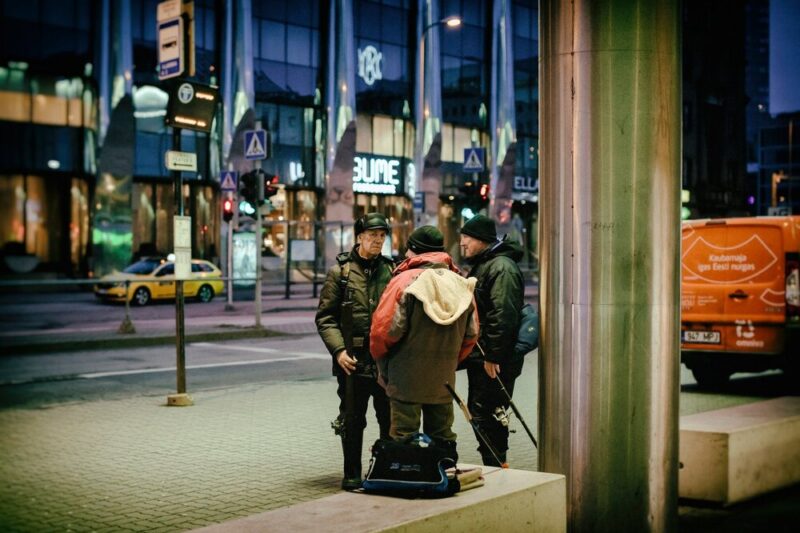
- People waiting for the bus at a bus stop. A bus stop is a place where you’re already automatically standing next to someone—why not secretly take a photo? Still, generally nothing interesting is happening there. A random person on a random street does not make a good photograph.
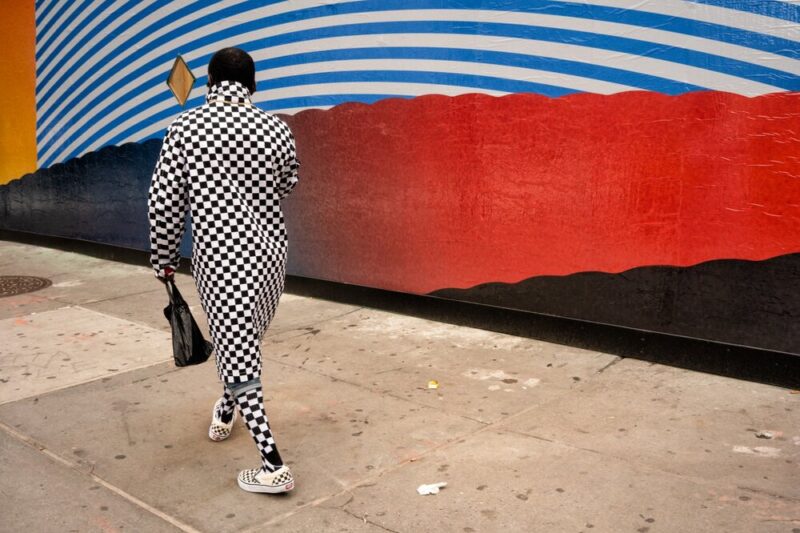
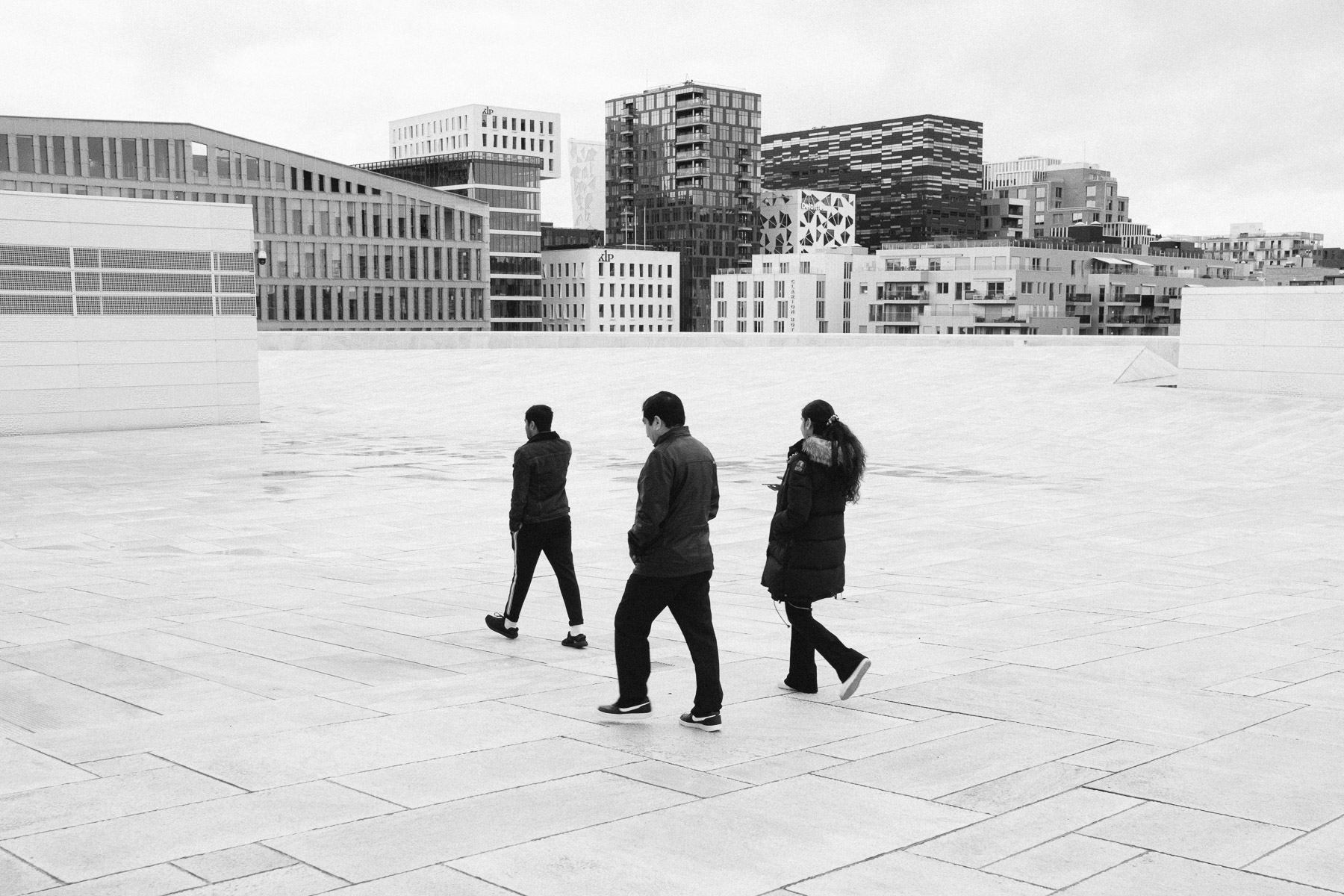
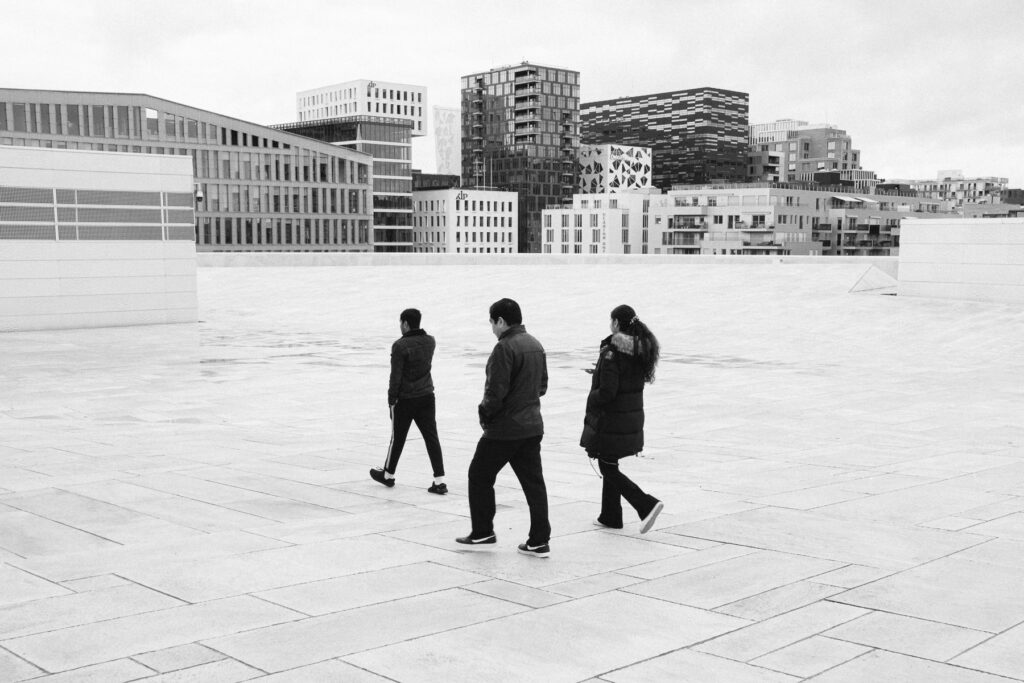
- People photographed from behind. Of course, there are many great photos taken from behind. But if you’re shooting from behind only because you didn’t dare photograph someone from the front, then to the viewer it feels like any other random snapshot on the sidewalk.
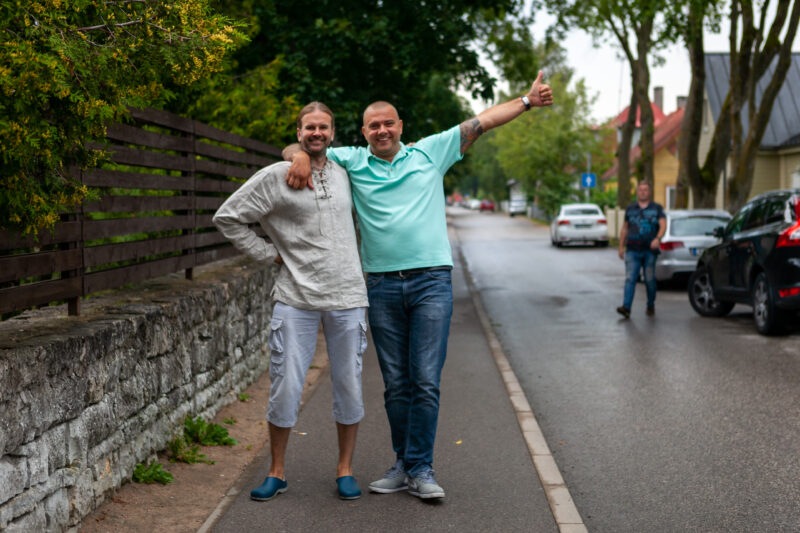
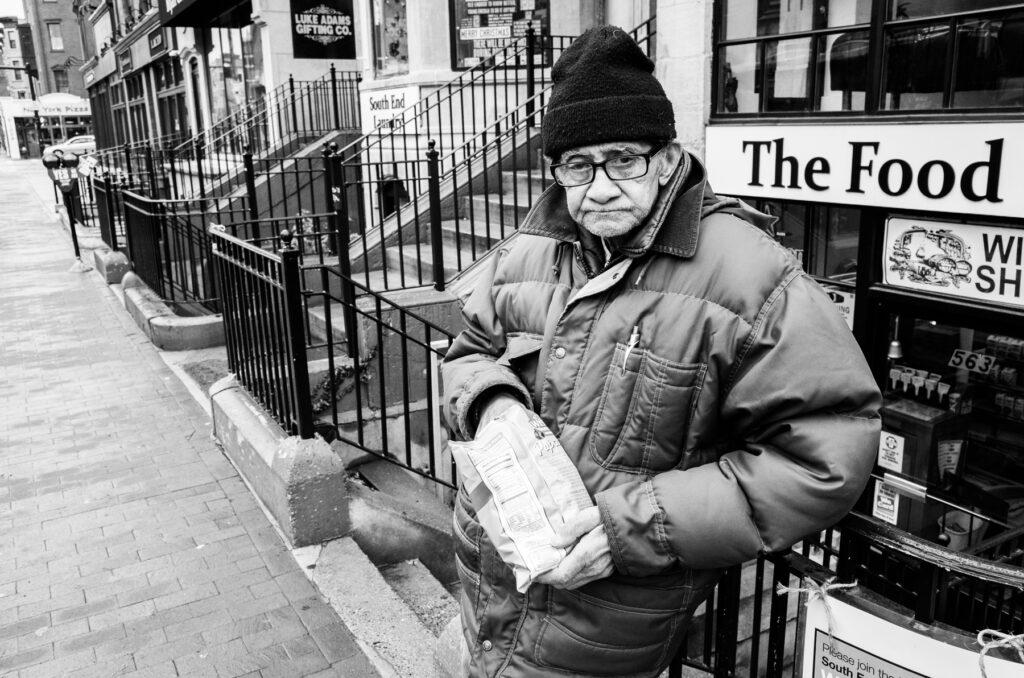
- People who are easy to approach (for example street musicians, homeless people, etc.). If it’s easy for you, it’s easy for many others—meaning everyone can get the same kind of photo, and there’s nothing special about it.
2. Don’t photograph street art just for the sake of street art
If you photograph someone else’s artwork, your photo must add something to it. Can you draw attention to something the street artist didn’t notice? Something viewers might not have noticed themselves? Can you create a connection that wouldn’t exist without your photo?
If you simply show someone else’s artwork exactly as the artist intended, then the value of the street art itself is likely greater than your photograph—and you’re decorating yourself with borrowed feathers.
For example, if someone has painted wings on a wall for tourists to pose in front of, and you capture someone standing there, then that is exactly what the artist intended—you haven’t discovered anything new.
3. Don’t leave your photos unedited
You can’t turn a bad and uninteresting photo into a good one with editing, but a good photo can definitely become better with a final touch. I mean very minimal corrections that are accessible and easy for everyone. You don’t need paid professional software for this.
The minimum you can do:
- Straighten the horizon. If you didn’t intend it and the horizon is accidentally a few degrees off, it’s very easy to fix.
- Crop—cutting the edges of the image is probably a more controversial topic, and many photographers prefer to leave the image exactly as it came out of the camera (especially analog photographers). But beginners often accidentally include something in the frame. If, for example, there’s someone’s shoulder unintentionally at the edge of the frame that distracts attention without adding anything, consider cropping it out. Most modern digital cameras shoot in a 16:9 or 4:3 ratio. When cropping, I recommend keeping the same aspect ratio. There may be reasons to change it, but if every one of your images looks different, it will likely work against you.
- As a bonus, check that the white balance is correct, slightly adjust exposure if needed, and add a bit of contrast. These changes are easier if you shoot in RAW format.
4. Don’t over-edit your photos
One of the easiest ways to ruin your photo is to over-edit it. Editing should stay within limits where it’s not immediately obvious that the image has been processed. Start with small steps.
5. Don’t evaluate your photos based on emotion
If you happened upon an extremely interesting moment on the street and want to rush home to share your treasure with the world, that’s when it’s worth slowing down and letting the images “sit in a drawer.” Allow enough time to pass for the initial emotion from the street to fade. After that, you’ll be able to analyze and evaluate your photo much more objectively.
6. Don’t give your photo a title that repeats what’s already visible
A title should add something to the photo. It shouldn’t repeat its content. There’s also no point in describing in the title the first thought that comes to every viewer’s mind. Don’t prevent the viewer’s imagination from wandering elsewhere. In many cases, a photo speaks more without a title.

7. Don’t stay on the street reviewing photos on your camera
Use your time on the street primarily for shooting.
8. Don’t limit yourself by genre
Street photography is probably one of the most fluid and loosely defined genres in photography. Don’t let yourself be restricted by what is and isn’t considered street photography. Photograph anything that captures your attention and makes a good photo for you.